Squirrel Removal & Exclusion Services
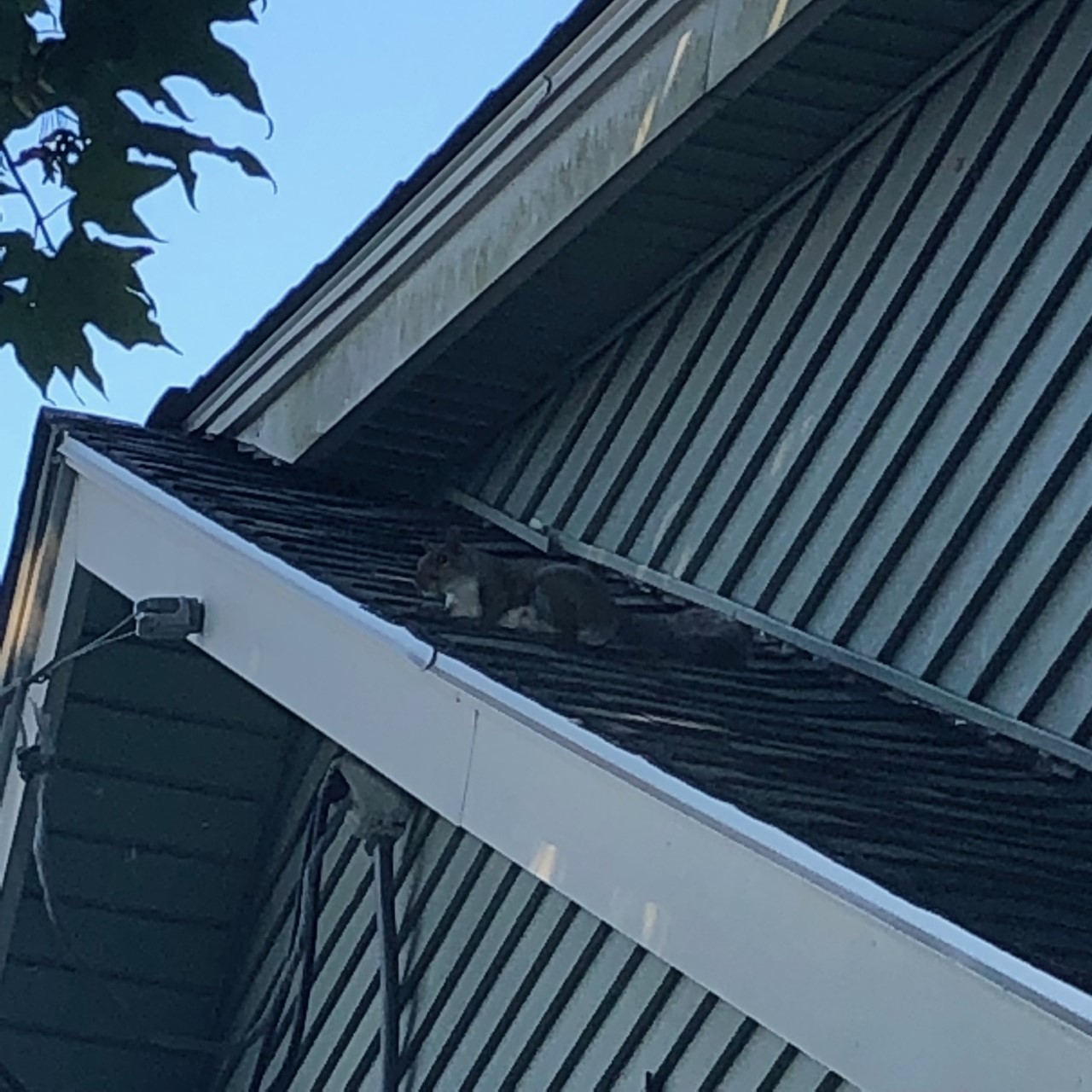
Floyd’s Pest & Wildlife Control provides squirrel removal and exclusion services throughout Connecticut. Squirrels commonly enter attics through roofline openings, soffit returns, fascia gaps, vents, and damaged trim. Once inside, they can chew wood, wiring, insulation, and stored items.
Removing squirrels is only part of the job. If the entry point remains open, more squirrels can move in or the same problem can return. Our focus is on identifying the access points, removing the animals, and sealing the structure properly.
Gray Squirrels, Flying Squirrels & Red Squirrels in Connecticut
Connecticut homes can have problems with several different squirrel species. The most common attic squirrel is the Eastern Gray Squirrel, but flying squirrels are also very common, especially in winter. Red squirrels are present in Connecticut too, although they are less abundant in most residential attic situations.
Each squirrel behaves differently. Gray squirrels are loud, active during the day, and commonly chew larger entry holes into soffits, fascia, and roof edges. Flying squirrels are nocturnal, much quieter, and often live in groups inside attics and wall voids. Red squirrels are less common, but they can still create serious chewing damage when they get into a structure.
Eastern Gray Squirrels
Eastern Gray Squirrels are the large gray squirrels most homeowners see during the day. They are commonly seen running across roofs, gutters, trees, and utility lines. In Connecticut homes, gray squirrels usually enter through soffit gaps, fascia damage, roof edges, gable vents, and chew holes.
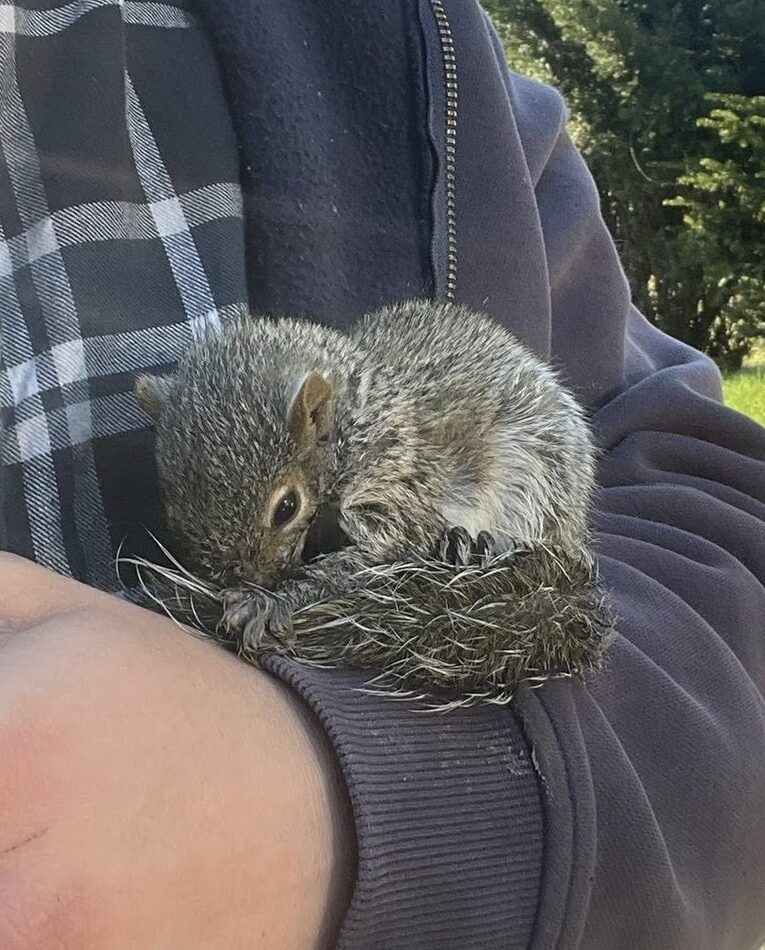
Gray squirrels commonly have two litters per year. The first litter is usually in late winter or early spring, and the second can happen in late summer. Litter size is commonly around 2 to 4 young, although it can vary. This is why squirrel removal has to be handled carefully during nesting season. Sealing an entry point too early can trap young squirrels inside the attic.
Flying Squirrels
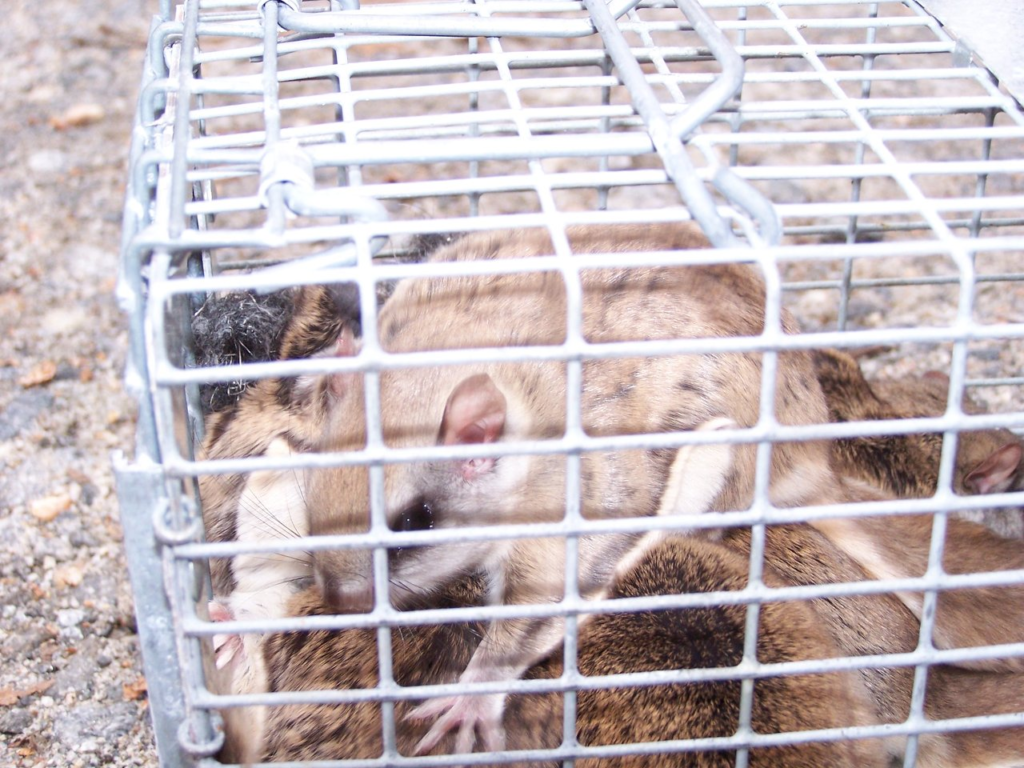
Flying squirrels are extremely common in Connecticut attics, but many homeowners never see them because they are nocturnal. Unlike gray squirrels, flying squirrels are active at night. Homeowners often mistake them for mice or rats because the scratching and movement usually happen after dark.
Flying squirrels can fit through very small openings and often use roofline gaps, ridge vents, soffits, fascia gaps, and wall transitions. During winter, flying squirrels may gather in attic colonies. It is not unusual to find groups of 10 to 40 flying squirrels using the same structure for warmth and shelter.
Flying squirrels typically have a spring litter inside attic spaces. Summer litters are more commonly outside because hot attic temperatures are not ideal for raising young. Flying squirrel litters are commonly around 2 to 6 young. Because they can live in groups and use small hidden entry points, flying squirrel exclusion often requires a more detailed inspection than a typical gray squirrel job.
Red Squirrels
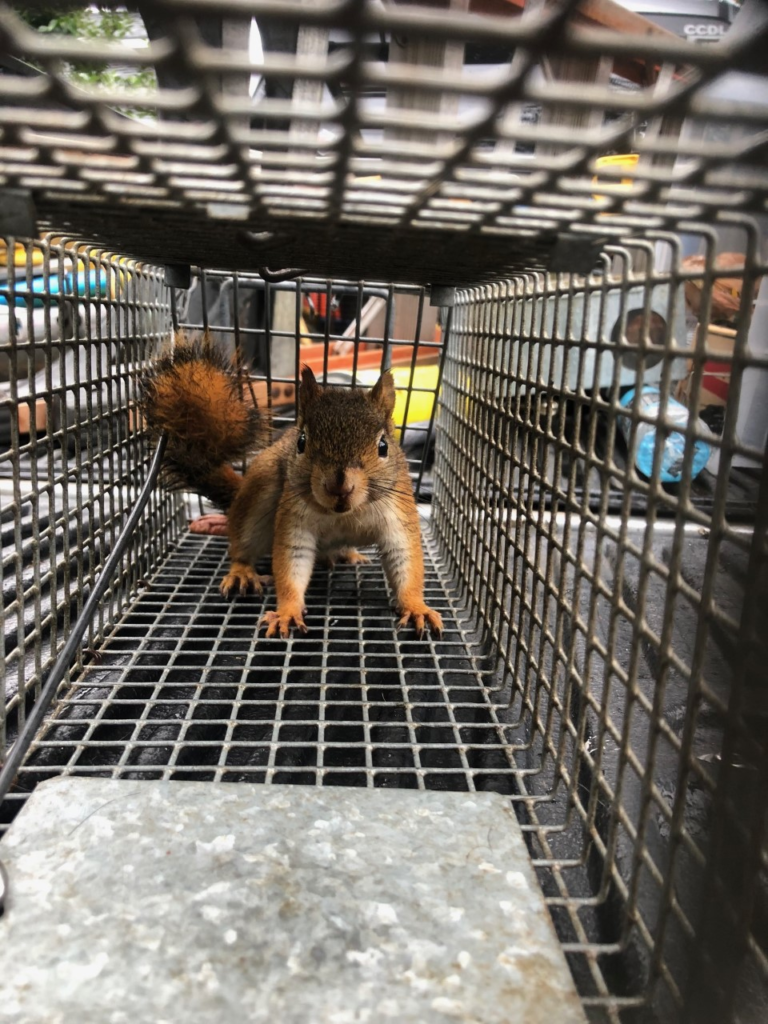
Red squirrels are found in Connecticut but are less abundant than gray squirrels in most residential areas. They are more common around wooded properties, evergreen-heavy areas, and rural settings.
Red squirrels are smaller, but they can be aggressive chewers. They may create loud attic activity, chew into weak areas, store food, and leave behind nesting material, cone debris, droppings, and insulation damage.
Squirrel Behavior Comparison
| Squirrel Type | Activity Time | Typical Attic Behavior | Litter Timing | Typical Litter Size | Winter Group Size |
|---|---|---|---|---|---|
| Gray Squirrel | Daytime | Loud running, chewing, nesting in attic insulation | Usually two litters per year: spring and late summer | Usually 2–4 young | Usually individual or small family activity |
| Flying Squirrel | Nighttime | Nocturnal scratching, wall void activity, group nesting | Usually spring litter in attics; summer litters more often outside | Usually 2–6 young | Often 10–40 squirrels in winter colonies |
| Red Squirrel | Daytime | Chewing, loud activity, food storage, nesting debris | Usually spring; may vary by conditions | Usually 3–6 young | Usually individual or small group activity |
Knowing the species matters. A gray squirrel job may involve a large chewed entry point and daytime attic noise, while a flying squirrel job may involve several small hidden gaps and nighttime movement. Red squirrels are less common, but they can still cause serious damage when they find a weak spot in the structure.
No matter which squirrel species is involved, the long-term solution is the same: remove the animals, confirm young are not trapped inside, and seal the structure properly so the problem does not keep returning.
Our Squirrel Services Include
- Squirrel inspections
- Attic squirrel removal
- Squirrel trapping where needed
- One-way exclusion where appropriate
- Entry point sealing
- Soffit and fascia repairs
- Vent screening and protection
- Chew hole repairs
- Attic cleanup
- Dropping removal
- Sanitization and odor control
- Contaminated insulation removal and replacement
Signs You May Have Squirrels in the Attic
Squirrel activity is often louder and more obvious than bat or mouse activity. Homeowners commonly hear movement during the day, especially early morning and late afternoon.
- Scratching or running sounds in the attic
- Noises during daylight hours
- Chewed holes near the roofline
- Damage around soffits, fascia, vents, or trim
- Droppings in the attic
- Insulation pushed down or disturbed
- Squirrels repeatedly seen on the roof
- Odor from nesting material or contamination
Where Squirrels Get Into Connecticut Homes
Squirrels are strong chewers. They often start with a small construction gap or weak spot and enlarge it until they can enter the attic.
| Common Entry Area | Why Squirrels Use It |
|---|---|
| Soffit returns | Corners and returns often have gaps that lead into attic space |
| Fascia boards | Aging or damaged fascia can be chewed open |
| Roof edges | Small openings along the roofline can be enlarged by chewing |
| Gable vents | Loose or weak vent screens can allow access into the attic |
| Chimney and dormer gaps | Trim gaps and flashing openings can create hidden entry points |
Our Squirrel Removal Process
1. Inspection
We inspect the exterior roofline, soffits, fascia, vents, attic access points, and visible chew damage. The goal is to locate the active entry point and any weak areas that could become future openings.
2. Identify Activity
We look for chew marks, droppings, nesting material, insulation damage, tracks, staining, and entry patterns. Squirrel jobs often require careful inspection because the visible hole may not be the only problem area.
3. Remove the Squirrels
Depending on the situation, squirrels may be removed using trapping, exclusion devices, or other appropriate methods. The approach depends on the structure, access point, and whether young animals may be present.
4. Seal Entry Points
Once the animals are removed, entry points must be sealed with durable materials. Squirrels can chew through weak repairs, so exclusion work needs to be done properly.
5. Cleanup and Sanitization
If squirrels have contaminated the attic with droppings, urine, nesting material, or damaged insulation, we can provide cleanup, sanitization, odor treatment, and insulation services.
Call or text 860-319-3216 for squirrel removal and exclusion service in Connecticut.
Squirrel Damage in Attics
Squirrels can cause serious damage once they get inside an attic. They chew to maintain their teeth, enlarge entry points, build nests, and move through insulation and stored materials.
Common squirrel damage includes:
- Chewed fascia, soffits, and trim
- Damaged vents and roofline materials
- Contaminated attic insulation
- Chewed wires or cable lines
- Nesting material in attic spaces
- Droppings and urine contamination
- Odor issues
Baby Squirrels in the Attic
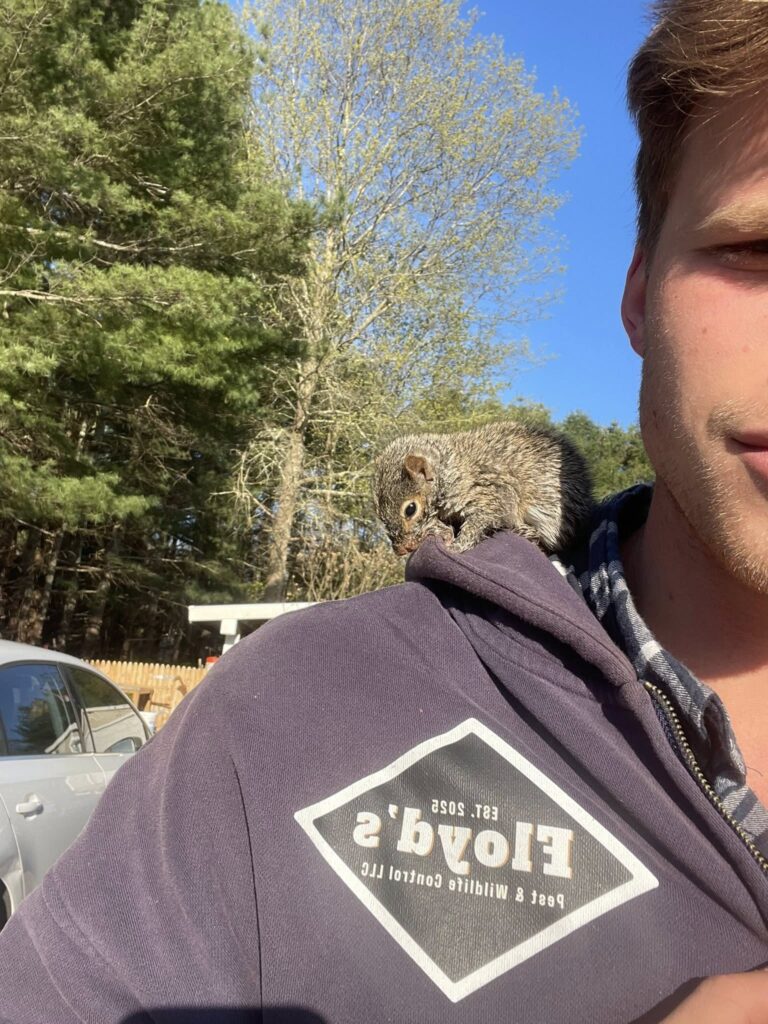
During nesting season, squirrels may have young inside the attic. This changes the removal strategy. Sealing the entry point too early can trap young squirrels inside, causing odor, noise, and additional problems.
A proper inspection helps determine whether young squirrels may be present and what removal method should be used. The goal is to remove the animals humanely and avoid creating a worse issue inside the structure.
Why Squirrel Problems Keep Returning
Most recurring squirrel problems happen because the actual entry point was never fully sealed. Removing the squirrel alone does not solve the issue if gaps along the roofline, soffits, fascia, or vents remain open.
Squirrels are persistent and often return to the same structure repeatedly. Once a home becomes an established nesting site, other squirrels may continue using the same access points season after season.
Many Connecticut squirrel problems involve:
- Open soffit returns
- Weak fascia repairs
- Loose vent screening
- Roof edge gaps
- Construction gaps along rooflines
- Repairs that squirrels can easily chew through
Long-term squirrel control depends on proper exclusion work and identifying all active entry areas — not just the visible hole.
Frequently Asked Questions About Squirrel Removal
What type of squirrels get into Connecticut attics?
The most common attic squirrels in Connecticut are Eastern Gray Squirrels and Flying Squirrels. Red squirrels also enter homes occasionally, especially in wooded areas.
How do squirrels get into attics?
Squirrels commonly enter through soffit gaps, fascia damage, roof edges, ridge vents, gable vents, and construction gaps along the roofline. They can enlarge weak areas by chewing.
Are flying squirrels active at night?
Yes. Flying squirrels are nocturnal, which means they are active after dark. Homeowners often mistake flying squirrel activity for mice or rats because the scratching and movement sounds happen at night.
Can squirrels damage my house?
Yes. Squirrels commonly chew wood, vents, wiring, fascia boards, soffits, insulation, and stored materials inside attics and wall spaces.
How many baby squirrels are usually in a litter?
Gray squirrels commonly have litters of 2 to 4 young and may have two litters per year. Flying squirrels commonly have litters of 2 to 6 young and often raise spring litters inside attic spaces.
Can I seal the hole myself after squirrels leave?
Sealing a hole too early can trap squirrels or young animals inside the attic. Proper squirrel removal should confirm all animals are out of the structure before repairs are completed.
Why do squirrel problems keep coming back?
Squirrel problems usually return because the entry point was never fully sealed or other weak areas on the structure were missed during the repair process.
Do you provide attic cleanup services?
Yes. Floyd’s Pest & Wildlife Control provides attic cleanup, dropping removal, sanitization, odor treatment, insulation removal, and insulation replacement services.
Do squirrels stay in attics year-round?
Some squirrels may stay in attics year-round, especially flying squirrels during winter. Others may use attics seasonally for nesting and shelter.
What is the best long-term solution for squirrels?
The best long-term solution is proper squirrel exclusion. This means removing the animals, identifying all active entry points, and sealing the structure with durable materials to help prevent future infestations.