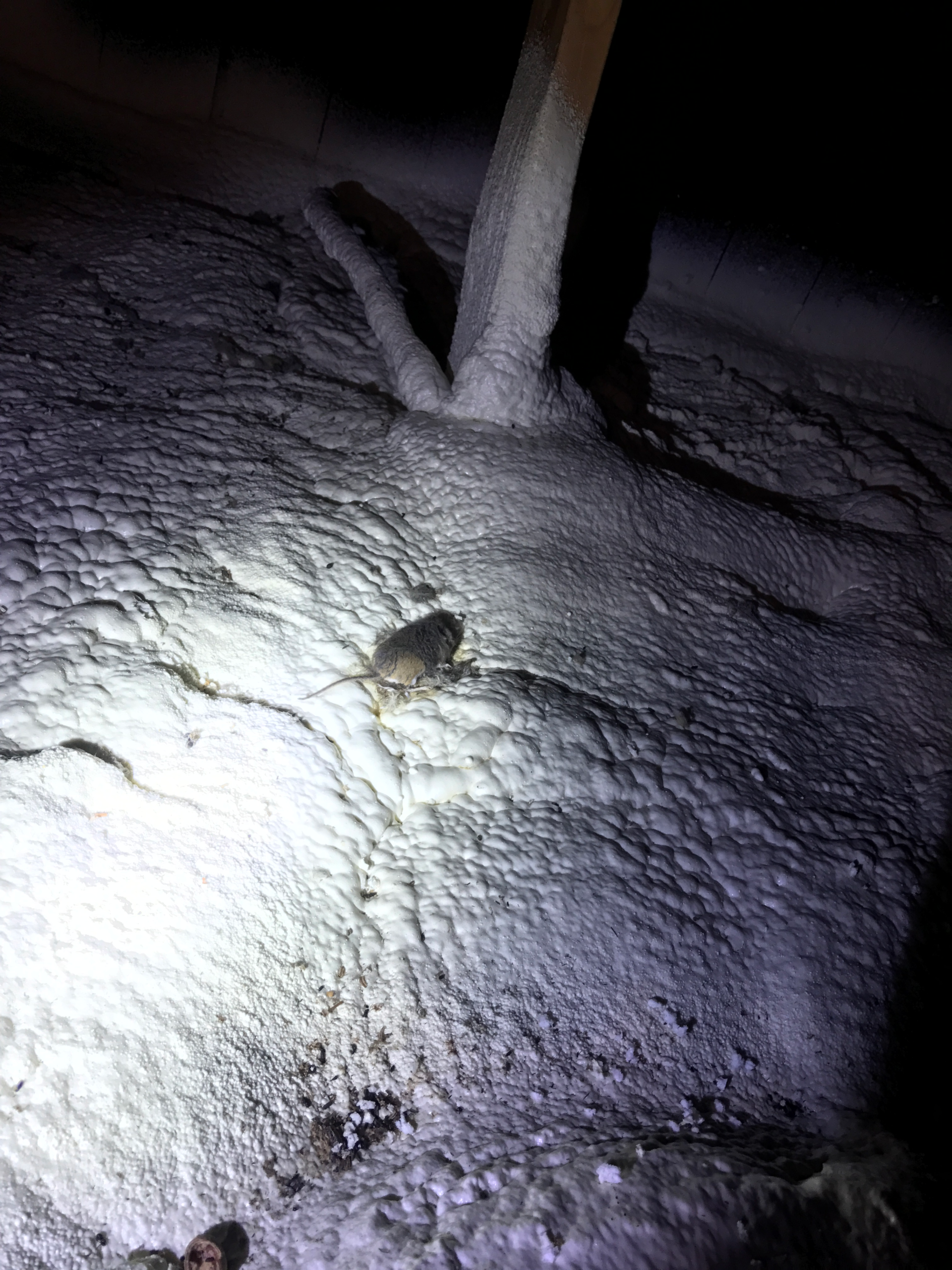
Rodent Control, Mouse Control & Rat Control Services
Floyd’s Pest & Wildlife Control provides rodent control services for Connecticut homes and businesses dealing with mice, rats, droppings, attic contamination, crawlspace activity, garage infestations, and recurring rodent entry.
Because Floyd’s Pest & Wildlife Control has a pest control license, we can provide more than trapping alone. Depending on the situation, rodent control may include baiting programs, trapping, exclusion repairs, sanitation, and cleanout services.
The goal is not just to kill or trap rodents. The goal is to identify how they are getting inside, reduce the active population, seal entry points, remove contamination when needed, and help prevent the problem from coming back.
Our Rodent Control Services Include
- Mouse inspections
- Rat inspections
- Rodent trapping
- Licensed baiting programs
- Exterior bait stations where appropriate
- Interior rodent control strategies
- Entry point sealing
- Foundation gap exclusion
- Garage and door sweep corrections
- Utility penetration sealing
- Attic and crawlspace inspections
- Rodent dropping cleanup
- Nesting material removal
- Sanitization and odor control
- Contaminated insulation removal and replacement
Common Rodents We Deal With in Connecticut
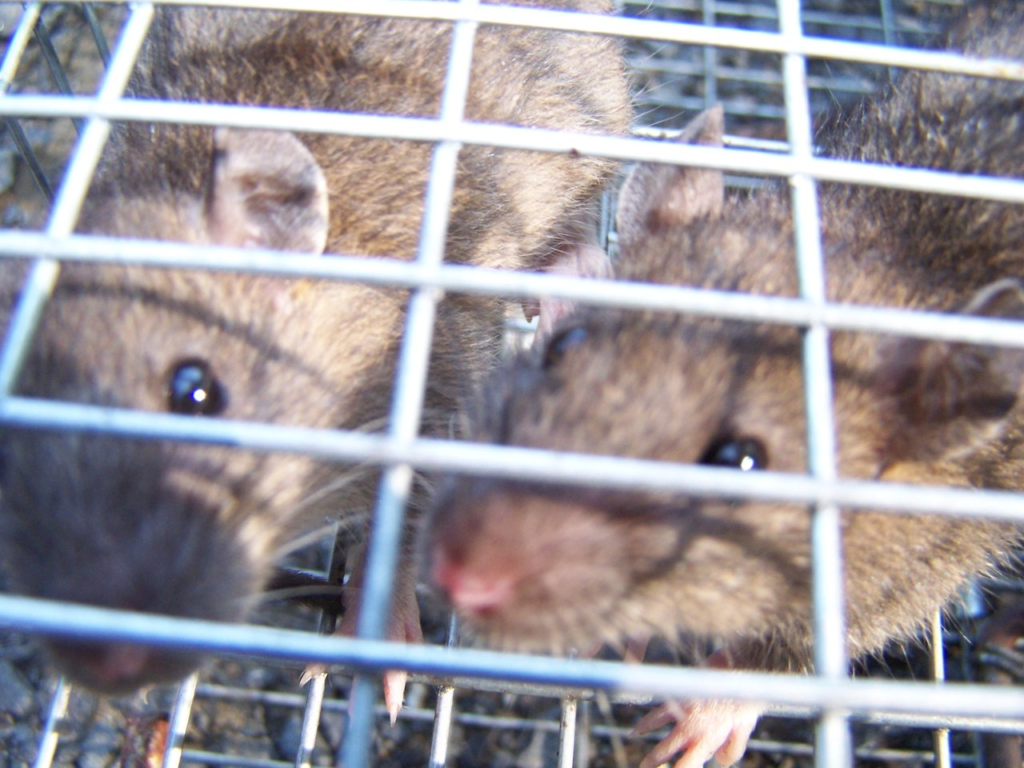
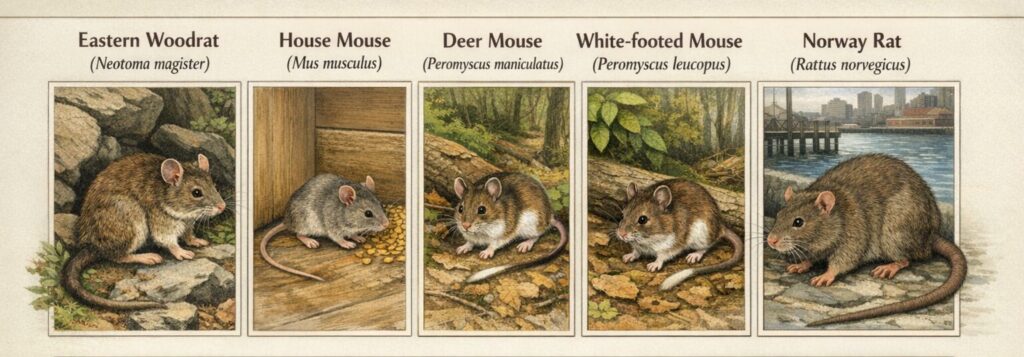
Most Connecticut rodent problems involve deer mice, house mice, and Norway rats. Wood rats are less common, but they are included here because homeowners sometimes use the term “rat” broadly when describing rodent activity.
Correct identification matters because mice and rats behave differently. Deer mice often show up in rural, wooded, and seasonal properties. House mice are common around buildings, garages, kitchens, basements, and wall voids. Norway rats are larger, more destructive, and commonly associated with burrows, foundations, trash areas, sheds, crawlspaces, and exterior food sources.
Rodent Comparison Chart
| Rodent Type | Common Activity | Typical Areas | Signs | Control Focus |
|---|---|---|---|---|
| Deer Mouse | Nocturnal, active in wooded and rural areas | Attics, basements, crawlspaces, sheds, garages, seasonal homes | Small droppings, nesting material, stored food damage, attic or wall sounds | Exclusion, trapping, sanitation, safe cleanup due to hantavirus risk |
| House Mouse | Lives close to people and reproduces quickly indoors | Kitchens, basements, garages, wall voids, utility areas, attics | Droppings in cabinets, gnaw marks, food damage, scratching sounds | Trapping, baiting where appropriate, exclusion, food source correction |
| Norway Rat | Large ground-dwelling rat, often tied to burrows and food sources | Foundations, crawlspaces, sheds, garages, dumpsters, yards, lower levels | Large droppings, burrows, grease marks, gnawing, strong odor, heavy damage | Baiting programs, trapping, exclusion, sanitation, exterior pressure reduction |
| Wood Rat | Less common in typical Connecticut structure work | Wooded areas, outbuildings, sheds, cluttered storage areas | Nesting piles, stored material damage, droppings, chewing | Inspection, exclusion, trapping, cleanup, habitat correction |
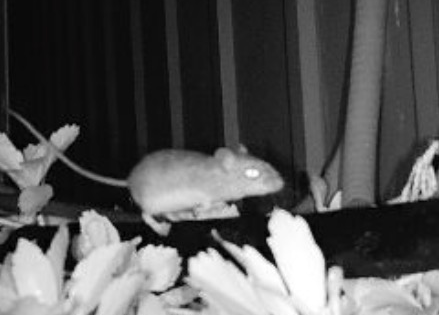
Deer Mouse Control in Connecticut
Deer mice are one of the most common rodents found in Connecticut and, in many parts of the state, they are arguably the number one rodent-related call wildlife control and pest control companies receive — especially in rural towns, wooded neighborhoods, shoreline communities, seasonal homes, barns, garages, crawlspaces, and attic spaces.
Throughout Connecticut, deer mice are constantly entering homes, sheds, garages, cabins, attics, outbuildings, and storage areas located near woods, brush lines, stone walls, farmland, wetlands, and shoreline vegetation. Many homeowners never actually see the mice themselves because deer mice are primarily nocturnal and spend much of their time hidden inside insulation, attic voids, wall cavities, garages, basements, and stored materials.
Unlike house mice, deer mice are heavily connected to outdoor habitat and are naturally adapted to wooded environments. They are often referred to as a “tree mouse” because they are exceptional climbers that regularly travel through trees, vines, rough siding, stacked firewood, utility lines, and rooflines. In Connecticut homes, deer mice commonly enter from the upper portions of the structure rather than only from the foundation level.
Many deer mouse infestations begin when mice climb directly onto the roof and enter through soffits, ridge vents, attic vents, fascia gaps, roof returns, chimney gaps, dormer transitions, or openings around upper siding areas. Once inside, they frequently establish nesting activity inside attic insulation, garage lofts, enclosed soffits, wall voids, crawlspaces, and storage areas.
Attics are one of the most common places we find deer mouse activity because the space provides warmth, darkness, protection from predators, and soft nesting material. Deer mice often build nests using insulation, paper, fabric, cardboard, dried vegetation, and stored household materials hidden inside quiet attic corners and wall cavities.
One of the biggest reasons deer mouse infestations are misdiagnosed is because they can be extremely loud inside attic spaces. Homeowners often believe they have squirrels in the attic because of the rapid scratching, chewing, running, and movement sounds overhead during nighttime hours. In many Connecticut homes, the activity is actually caused by deer mice racing across rafters, beams, insulation, attic trusses, and wall voids.
Deer mice are surprisingly active climbers and can move quickly through upper portions of the structure, especially inside attics and unfinished wall cavities. In heavily infested homes, the amount of movement noise can sound far larger than what most homeowners expect from a mouse infestation.
Like other rodents, deer mice constantly chew to wear down their teeth, which never stop growing. They commonly chew electrical wiring, insulation, cardboard boxes, plastic containers, vapor barriers, ductwork materials, stored belongings, and wood surfaces while nesting and traveling throughout the structure. Chewed electrical wiring inside attics and walls is one of the most serious problems associated with deer mouse infestations because it can create hidden electrical hazards and expensive structural damage.
Deer mice are also important from a health perspective because they are a known carrier associated with hantavirus concerns. Their droppings, urine, saliva, and nesting materials should always be treated carefully, especially inside enclosed spaces like attics, crawlspaces, sheds, garages, basements, cabins, and seasonal homes where contamination may build up over time.
In addition to hantavirus concerns, deer mice may also carry fleas, mites, and parasites that spread through nesting areas and contaminated insulation. In wooded Connecticut environments, deer mice are also considered one of the primary hosts supporting deer tick populations because immature deer ticks commonly feed on rodents during portions of their lifecycle before later attaching to larger animals and humans.
Why Deer Mouse Problems Are So Common in Connecticut
- Wooded rural towns and shoreline communities create ideal habitat for deer mice.
- Seasonal homes, sheds, barns, and garages provide quiet nesting locations close to outdoor habitat.
- Attics and upper roofline areas allow climbing rodents easy access into structures.
- Connecticut winters drive deer mice indoors searching for warmth and shelter.
- Stone walls, woodpiles, brush lines, and dense vegetation support large outdoor rodent populations.
- Older homes with roofline gaps and attic openings create easy entry opportunities.
Common Signs of Deer Mouse Activity
- Nighttime scratching or running sounds in attic spaces
- Activity mistaken for squirrels in the attic
- Small droppings in attics, garages, basements, or storage areas
- Nests made from insulation, paper, fabric, or stored materials
- Chewed electrical wiring, cardboard, or insulation
- Strong rodent odor in enclosed spaces
- Movement trails through attic insulation
- Rodent activity near seasonal items or stored boxes
Common Deer Mouse Entry Points
- Roofline gaps and soffits
- Attic vents and ridge vents
- Gable vents and fascia gaps
- Openings around chimneys and dormers
- Garage lofts and upper siding transitions
- Utility penetrations entering upper portions of the home
- Tree access directly over rooflines
Because deer mice are closely tied to surrounding outdoor habitat, long-term control usually requires more than trapping alone. Effective deer mouse control often depends on identifying roofline and attic entry points, sealing structural gaps, reducing exterior rodent pressure, correcting exclusion problems, and preventing mice from repeatedly re-entering the structure.
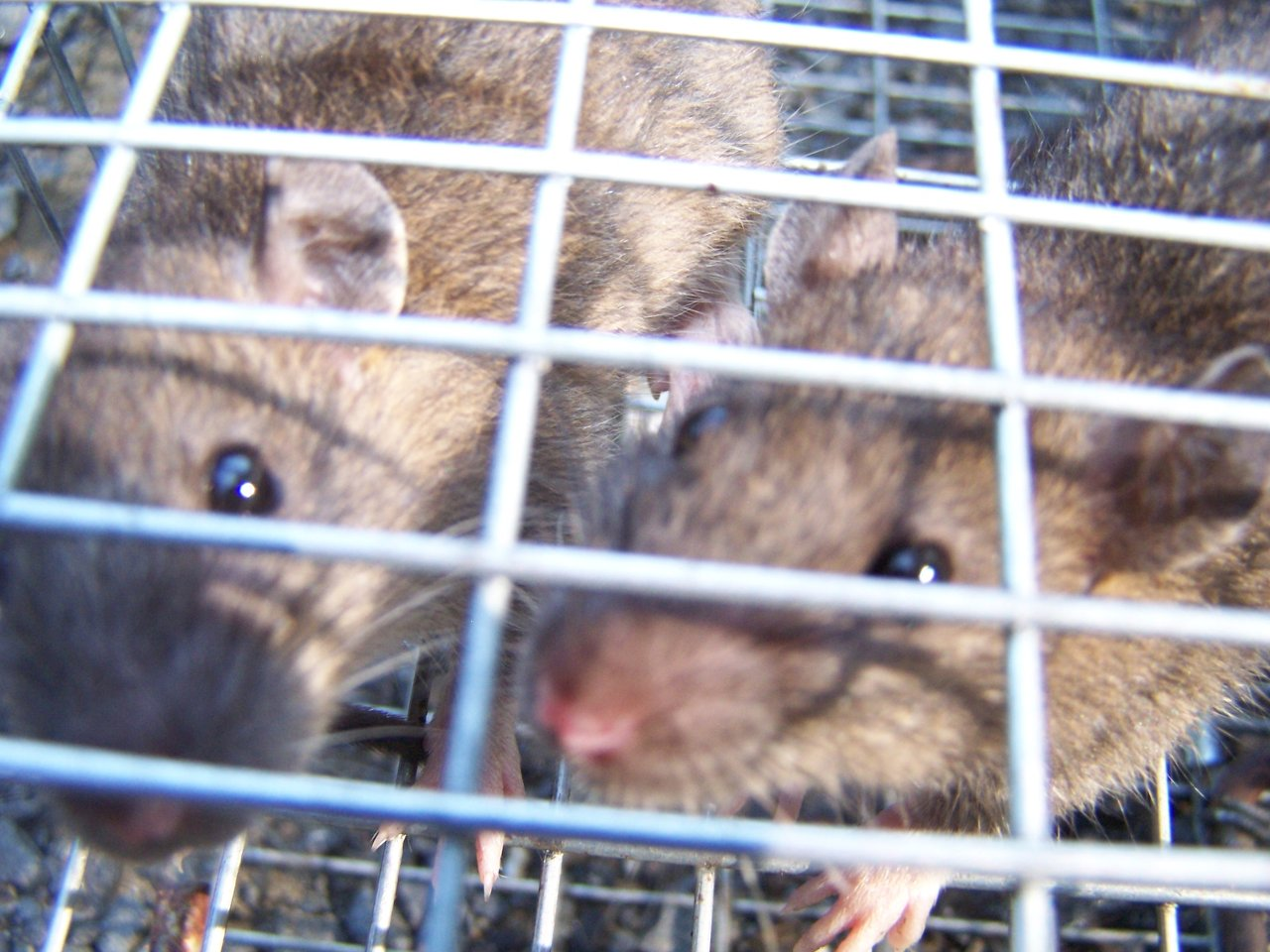
Norway Rat Control in Connecticut
Norway rats have become one of the fastest growing rodent problems in Connecticut. While rats were once mostly associated with cities, older urban areas, dumpsters, and commercial districts, they are now widespread throughout suburban neighborhoods, rural towns, shoreline communities, farms, marinas, restaurants, apartment complexes, and residential properties across the state.
Today, Norway rats are found almost everywhere in Connecticut. We now regularly see rat infestations in quiet residential neighborhoods, wooded properties, shoreline homes, garages, sheds, crawlspaces, barns, chicken coops, storage areas, retaining walls, and backyard feeding areas far outside traditional city environments.
One major factor contributing to the increase in rat activity throughout Connecticut is the rapid growth of backyard chicken ownership. Chicken feed, spilled grain, cracked corn, scratch feed, water sources, egg areas, compost piles, and sheltered coop environments create ideal feeding and nesting conditions for rats. Once rats establish activity around a coop or feeding area, they often spread into nearby garages, sheds, crawlspaces, basements, and homes.
Many homeowners are surprised to learn how quickly rat populations can establish around a property with chickens, bird feeders, outdoor pet food, compost piles, gardens, unsecured trash, or dense exterior cover. In many cases, the rats remain hidden for long periods because most of their activity occurs at night or underground.
Norway rats are large, powerful rodents that spend much of their time at ground level. Unlike deer mice or roof rats, Norway rats are heavily associated with burrowing, foundations, crawlspaces, retaining walls, seawalls, sheds, dumpsters, garages, and lower portions of structures.
One of the most common signs of a Norway rat infestation is the appearance of multiple burrow holes around the property. These holes are often mistaken for chipmunk activity, especially by homeowners unfamiliar with rat burrowing behavior. However, active rat burrows are usually larger, dirtier, more irregular, and commonly connected to travel routes around foundations, sheds, decks, retaining walls, wood piles, crawlspaces, and feeding areas.
Rat burrow systems may contain multiple entrances and hidden tunnel networks beneath the ground. In severe infestations, rats can establish extensive burrowing systems beneath patios, sidewalks, slabs, decks, sheds, foundations, seawalls, and outdoor structures.
Norway rats are also strong swimmers and excellent climbers when necessary. Along Connecticut shoreline communities, rats commonly move through drainage systems, seawalls, marina areas, docks, crawlspaces, retaining walls, dumpsters, and waterfront structures while searching for food and shelter.
Inside buildings, Norway rats can cause major structural and contamination problems. Rats constantly chew to wear down their teeth and frequently damage wiring, insulation, wood framing, plastic piping, storage boxes, food containers, ductwork, and vapor barriers. Chewed electrical wiring caused by rats is a serious fire hazard in homes, garages, attics, crawlspaces, restaurants, and commercial buildings.
Rats also leave behind heavy contamination from droppings, urine, nesting materials, grease trails, and food debris. Large infestations often create strong odors inside crawlspaces, basements, garages, utility rooms, wall voids, and storage areas.
Why Norway Rat Problems Are Increasing in Connecticut
- Backyard chicken coops and poultry feed create reliable food sources and shelter.
- Bird feeders, compost piles, and outdoor pet food support rat populations near homes.
- Milder winters and dense development allow rats to stay active year-round.
- Older foundations, crawlspaces, and garages create easy access into structures.
- Dumpsters, restaurants, marinas, and commercial areas support large rat populations.
- Wood piles, brush, clutter, and retaining walls provide ideal hiding and nesting areas.
Common Signs of Norway Rat Activity
- Multiple holes in the ground mistaken for chipmunk burrows
- Burrows near sheds, decks, foundations, chicken coops, or retaining walls
- Large droppings around crawlspaces, garages, basements, or storage areas
- Strong ammonia or musky rodent odor
- Grease marks along walls, beams, and travel routes
- Chewed wiring, wood, insulation, or food containers
- Scratching or movement sounds inside walls and crawlspaces
- Rat sightings during daylight hours
Common Norway Rat Entry Areas
- Foundation gaps and crawlspace openings
- Garage door corners and slab gaps
- Burrows beneath sheds, decks, and patios
- Utility penetrations near ground level
- Drainage systems and retaining walls
- Basement windows and bulkhead gaps
- Chicken coops, feed storage areas, and barns
Norway rat infestations often continue because the exterior conditions supporting the rats remain active. Long-term rat control usually depends on combining population reduction with exclusion work, sanitation improvements, burrow management, food-source reduction, structural repairs, and prevention strategies designed to stop rats from repeatedly re-establishing activity around the property.
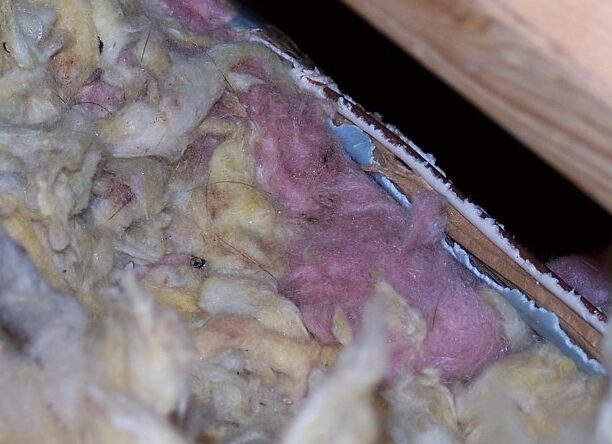
House mice commonly chew electrical wiring inside walls, attics, basements, garages, and utility spaces while nesting throughout Connecticut homes.
House Mouse Control in Connecticut
House mice are one of the most common indoor rodent problems in Connecticut homes and businesses. Unlike deer mice, which are more closely connected to outdoor wooded habitat, house mice are highly adapted to living directly around people and structures. Once they gain access inside, they often remain indoors year-round while nesting, feeding, and reproducing inside walls, ceilings, basements, garages, kitchens, crawlspaces, attics, storage areas, and utility spaces.
House mice are extremely successful because they reproduce quickly, hide well, and can survive in very small concealed areas inside the structure. A few mice inside a wall void or basement can eventually become a major infestation if entry points remain open and nesting conditions stay favorable.
Throughout Connecticut, house mouse infestations are especially common in older homes, garages, apartment buildings, restaurants, storage facilities, crawlspaces, warehouses, and multifamily housing where utility penetrations, garage gaps, basement openings, and aging construction materials create easy access points.
One of the biggest reasons house mice become such persistent problems is their ability to move through hidden structural voids. Mice commonly travel inside wall cavities, beneath cabinets, above drop ceilings, inside insulation, behind appliances, around plumbing lines, and through utility chases without being seen directly.
Many homeowners first discover a house mouse infestation after hearing scratching sounds in walls or ceilings at night, finding droppings in cabinets or drawers, or noticing food packaging damage in kitchens and pantries.
House mice are also excellent climbers and can easily access upper cabinets, shelving, attic spaces, utility pipes, wiring runs, garage lofts, and storage racks. In many Connecticut homes, mice spread throughout multiple levels of the structure using hidden utility routes and wall voids.
Like all rodents, house mice constantly chew to wear down their teeth, which never stop growing. Mice commonly chew electrical wiring, insulation, cardboard boxes, stored belongings, food packaging, plastic materials, wood trim, and soft building materials throughout the structure.
Chewed wiring caused by mice is one of the most serious hidden dangers associated with rodent infestations. Mice often damage electrical wires inside walls, attics, garages, basements, ceilings, and utility spaces where the problem may remain hidden for long periods. These damaged wires can create fire hazards and expensive repair issues throughout the building.
House mice also contaminate structures with urine, droppings, grease trails, nesting material, and food debris. Even relatively small infestations can create strong odors inside cabinets, basements, crawlspaces, garages, wall voids, attics, and enclosed storage areas.
One female house mouse can produce multiple litters per year, allowing infestations to grow quickly once indoor nesting becomes established. Because mice reproduce so rapidly, small problems can escalate into widespread infestations surprisingly fast if structural entry points are not corrected.
Why House Mouse Problems Are So Common
- Older homes and aging construction create countless small entry points.
- Garage door gaps and utility penetrations allow mice easy access indoors.
- Basements, crawlspaces, and wall voids provide protected nesting areas.
- Stored food, pet food, and cluttered storage areas support indoor infestations.
- Apartment buildings and multifamily housing allow mice to spread between units.
- Cold Connecticut winters drive mice indoors searching for warmth and shelter.
Common Signs of House Mouse Activity
- Small droppings inside cabinets, drawers, pantries, or storage areas
- Scratching or movement sounds inside walls and ceilings
- Chewed food packaging and pantry contamination
- Chewed wiring, cardboard, insulation, or plastic materials
- Strong musky or ammonia-like rodent odor
- Nests made from shredded paper, insulation, fabric, or stored materials
- Grease marks along walls, pipes, beams, and utility routes
- Mouse sightings near kitchens, garages, basements, or appliances
Common House Mouse Entry Points
- Garage door corners and worn weather stripping
- Foundation cracks and sill plate gaps
- Utility penetrations around pipes and wiring
- Crawlspace vents and basement openings
- Gaps beneath siding and trim boards
- Openings around AC lines and utility chases
- Roofline gaps and attic access points
House mouse infestations often continue because mice can repeatedly enter through extremely small structural openings. Long-term mouse control usually requires more than trapping alone. Effective control often depends on identifying hidden entry points, sealing structural gaps, reducing food access, improving sanitation conditions, and preventing mice from repeatedly re-establishing activity inside the building.
Signs You May Have a Rodent Problem
Rodent problems are often discovered only after the infestation has already become established inside the structure. Mice and rats are primarily nocturnal, which means most of their feeding, nesting, chewing, and movement activity happens at night inside walls, ceilings, attics, crawlspaces, basements, garages, kitchens, storage rooms, and utility spaces.
In many Connecticut homes, homeowners first notice scratching sounds, unusual odors, droppings, or chewing damage long before they actually see a live rodent. Different rodents also leave behind different types of droppings, smells, nesting behavior, and structural damage patterns that can help identify which species is causing the problem.
Rodent Odors and Smells
Rodent infestations often create strong odors that become more noticeable as contamination builds up inside enclosed spaces. Mouse infestations typically create a stale, musky, ammonia-like smell caused by urine saturation, droppings, nesting material, and body oils left along travel routes.
Heavy mouse infestations inside attics, garages, wall voids, basements, crawlspaces, and storage areas may develop a sharp ammonia odor that becomes stronger in warmer weather or enclosed spaces with poor airflow.
Rat infestations usually produce a much heavier and more pungent odor than mice. Norway rat infestations often create strong musky smells combined with urine odor, greasy contamination, damp nesting debris, and foul air circulation around crawlspaces, burrows, basements, garages, dumpsters, or heavily contaminated areas.
Dead rodents trapped inside walls, ceilings, crawlspaces, attics, insulation, or ductwork can also create powerful decomposition odors that may last for days or even weeks depending on conditions inside the structure.
How Droppings Help Identify the Rodent
Rodent droppings are one of the clearest ways to help determine which rodent is active inside the structure. The size, shape, quantity, and location of droppings can often provide important clues about whether the problem involves deer mice, house mice, or rats.
Deer Mouse Droppings
Deer mouse droppings are small, dark, and slightly pointed on the ends. They are usually scattered around attic spaces, garages, sheds, crawlspaces, stored boxes, insulation, rafters, and seasonal items. Because deer mice are strong climbers, droppings are often found in elevated areas such as attic beams, shelves, garage lofts, and upper storage spaces.
- Typically about the size of a grain of rice
- Slightly pointed or tapered ends
- Usually dark brown or black when fresh
- Often scattered lightly along travel routes and nesting areas
- Common in attics, garages, sheds, crawlspaces, and seasonal homes
House Mouse Droppings
House mouse droppings are also small but are usually more uniform in shape with slightly pointed ends. House mice leave droppings constantly while traveling, feeding, and nesting inside kitchens, cabinets, wall voids, basements, utility spaces, garages, and storage areas.
Because mice urinate and defecate continuously while moving, large infestations may leave hundreds or even thousands of droppings hidden throughout the structure.
- Small rice-shaped droppings with pointed ends
- Usually dark when fresh and lighter gray as they age
- Common near food sources, cabinets, drawers, and wall edges
- Often concentrated around nesting areas and travel routes
- May appear beneath sinks, inside pantries, near appliances, or along basement walls
Norway Rat Droppings
Norway rat droppings are much larger and thicker than mouse droppings. Rat droppings are often capsule-shaped with blunt ends and are commonly found near crawlspaces, basements, garages, burrows, dumpsters, sheds, chicken coops, storage areas, and lower portions of structures.
Large amounts of rat droppings often indicate an established infestation with active travel routes nearby.
- Much larger than mouse droppings
- Typically blunt-ended and capsule shaped
- Usually dark brown or black when fresh
- Often found in clusters near nesting or feeding areas
- Common near crawlspaces, burrows, basements, garages, sheds, and dumpsters
Other Common Signs of Rodent Activity
- Scratching or movement sounds inside walls, ceilings, or attics
- Chewed food packaging and pantry contamination
- Gnaw marks on wiring, wood, insulation, plastic, or stored materials
- Grease marks and rub stains along walls or utility routes
- Burrows near foundations, sheds, retaining walls, patios, or chicken coops
- Nesting material made from insulation, paper, fabric, cardboard, or stored items
- Pets staring at walls, appliances, cabinets, or attic ceilings
- Strong ammonia, musky, or decomposition odors
- Visible rodent trails through attic insulation or dusty surfaces
- Chewed entry points around foundations, vents, garage doors, or rooflines
Because different rodents behave differently, proper identification is important when developing a rodent control plan. Deer mice, house mice, and Norway rats often require different trapping strategies, exclusion methods, sanitation approaches, and long-term prevention solutions.
Listening to Attic Noises: Is It Mice, Squirrels, or Bats?
One of the most common questions homeowners ask is whether the noises in the attic are being caused by mice, squirrels, or bats. While a proper inspection is still the best way to confirm the animal, the way rodents and wildlife respond to sudden noise inside the structure can sometimes provide useful clues.
A simple field trick sometimes used in wildlife control is to lightly bang on the ceiling or wall near the area where activity is being heard. Usually one or two solid hits is enough to trigger a response from the animal without causing damage to the structure.
The response pattern can often help narrow down what type of animal may be active inside the attic, wall, or ceiling area.
Typical Noise Responses by Animal
| Animal | Typical Response | What It Often Sounds Like |
|---|---|---|
| Mice | Usually freeze or stop moving temporarily | Light scratching, tiny footsteps, fast movement inside walls or insulation |
| Squirrels | Usually panic and run, often toward the entry point | Heavy running, rolling sounds, loud chewing, rapid movement across the attic |
| Bats | Often ignore the noise and continue what they were doing | Light chirping, fluttering, rustling, or subtle scratching near walls or soffits |
This technique is not perfect, but in many cases it can provide surprisingly useful information before a full inspection is performed. In the wildlife control industry, this basic response test often works because each animal reacts differently to sudden vibration and perceived danger inside the structure.
Mice typically freeze in place to avoid detection. Squirrels usually bolt quickly across the attic, often running toward a roof edge, soffit, or known entry point. Bats commonly remain hanging or crawling in place and may show little reaction at all unless directly disturbed.
While this method has a fairly high success rate in helping narrow down the likely animal — often surprisingly accurate in real-world attic situations — it should still be considered a rough field indicator rather than a guaranteed identification method. The most reliable way to confirm attic activity is through a direct inspection of droppings, entry points, staining, nesting material, and structural evidence.
In many Connecticut homes, attic noises are misidentified because deer mice can sound much larger than expected, squirrels may move intermittently throughout the day, and bats often remain quiet for long periods before becoming active at dusk.
Where Mice and Rats Get Into Connecticut Homes
Rodents do not need a large opening to get inside. Mice can use very small gaps around foundations, garage doors, utility lines, siding, vents, and older construction details. Rats usually need larger openings but can chew, dig, and exploit weak areas around foundations and crawlspaces.
| Entry Area | Why Rodents Use It |
|---|---|
| Foundation gaps | Small openings at sill plates, corners, and cracks give mice direct access inside. |
| Garage doors | Worn weatherstripping and corner gaps are common mouse and rat entry points. |
| Utility penetrations | Gaps around pipes, wires, AC lines, and exterior penetrations allow rodent access. |
| Crawlspace vents | Damaged screens or open vents can allow rodents into crawlspaces and lower levels. |
| Siding and trim gaps | Loose siding, corner boards, and trim gaps can create hidden entry points. |
| Roofline and attic gaps | Mice can climb and enter through soffits, vents, and roofline openings. |
Our Rodent Control Process
1. Inspection
We inspect the interior and exterior of the structure to identify rodent activity, droppings, nesting areas, food sources, travel routes, and entry points.
2. Identify the Rodent
Mouse and rat jobs require different strategies. Deer mice, house mice, and Norway rats behave differently, so proper identification helps determine the best control plan.
3. Trapping or Baiting Program
Depending on the situation, we may use trapping, baiting programs, or a combination approach. Because Floyd’s Pest & Wildlife Control has a pest control license, baiting programs can be used where appropriate and in accordance with label directions and safety requirements.
4. Exclusion and Entry Point Sealing
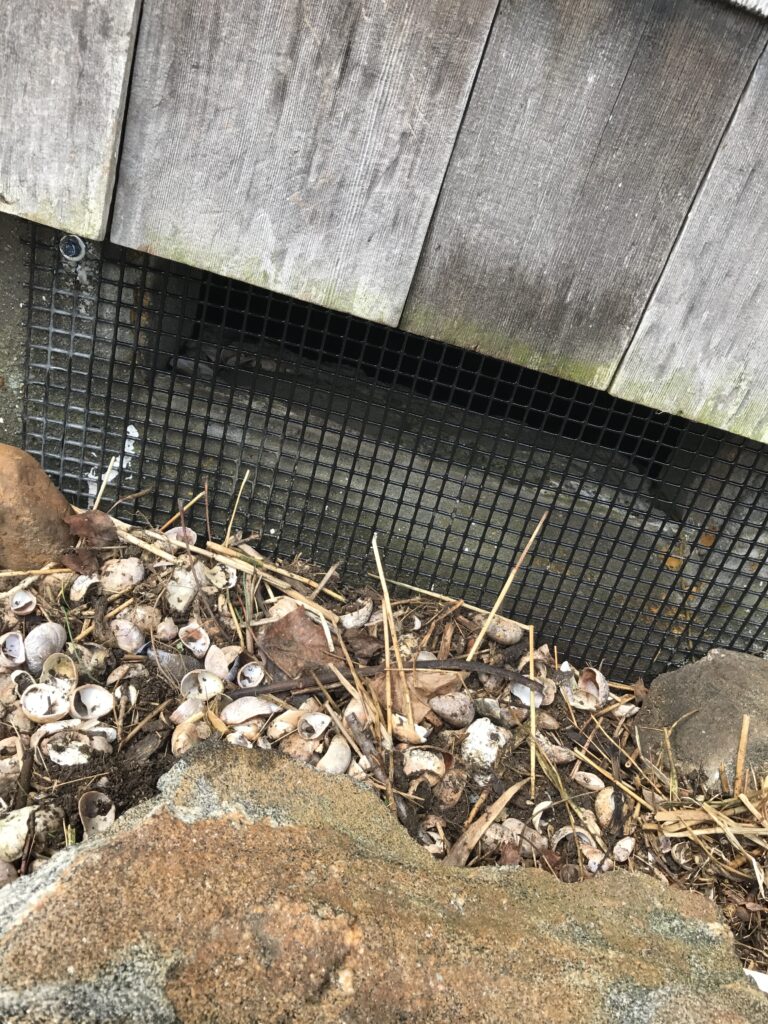
Once the active problem is being controlled, entry points should be sealed. Exclusion may include sealing foundation gaps, garage door gaps, utility openings, crawlspace vents, siding gaps, and other structural access points.
5. Cleanup and Sanitization
Rodent droppings, urine, nesting material, and contaminated insulation may require cleanup and sanitization. Cleanup should be handled carefully, especially where deer mice or heavy contamination may be present.
6. Prevention
Long-term prevention may include reducing food sources, securing trash, correcting garage gaps, cleaning storage areas, and maintaining bait stations where appropriate.
Call or text 860-319-3216 for mouse control, rat control, baiting programs, exclusion, and cleanup in Connecticut.
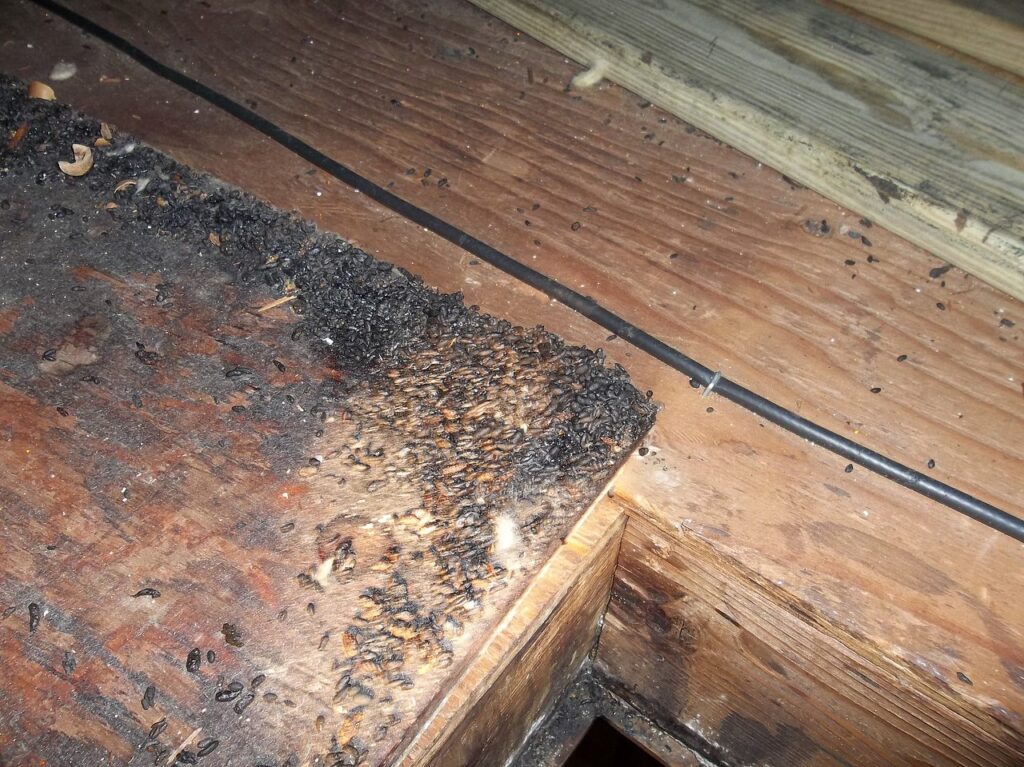
Hantavirus Risk and Rodent Cleanup
Rodent droppings, urine, saliva, and nesting materials should always be treated carefully inside attics, crawlspaces, garages, basements, sheds, barns, seasonal homes, storage areas, and other enclosed spaces where mice have been active.
In Connecticut, deer mice are one of the rodents most commonly associated with hantavirus concerns. Deer mice frequently nest inside attic insulation, wall voids, sheds, garages, crawlspaces, cabins, and seasonal properties where droppings and contaminated nesting material may accumulate over time.
Hantavirus is a serious respiratory illness associated with exposure to particles contaminated by infected rodent urine, droppings, or saliva. The virus itself is not spread by simply seeing a mouse or finding a few droppings. The main concern occurs when dried rodent contamination becomes disturbed and tiny airborne particles are inhaled during sweeping, vacuuming, demolition, attic work, insulation removal, or cleanup activities.
Many homeowners unknowingly increase exposure risk by using a shop vacuum or broom to clean dry droppings inside garages, attics, basements, sheds, or crawlspaces. Sweeping or vacuuming rodent waste can push contaminated dust into the air where it may be inhaled.
Older attics, seasonal homes, garages, barns, sheds, and cabins are often the highest-risk areas because deer mice may remain active inside these spaces for long periods without being discovered. In severe infestations, large amounts of droppings, urine staining, nesting material, contaminated insulation, and rodent debris may accumulate throughout enclosed portions of the structure.
In addition to hantavirus concerns, rodent infestations may also expose people to bacteria, parasites, fleas, ticks, mites, and other contamination issues associated with long-term nesting activity inside structures.
The risk is not a reason to panic, but it is a reason to approach rodent cleanup carefully and avoid disturbing dry droppings or nesting material without proper precautions.
How Rodents Spread Hantavirus Concerns
- Urine and droppings: Infected rodents leave behind contaminated urine and droppings while traveling and nesting throughout the structure.
- Nesting materials: Rodent nests made from insulation, paper, fabric, cardboard, and debris may contain contaminated saliva, urine, and droppings.
- Airborne dust: Dry rodent waste can become airborne when swept, vacuumed, or disturbed during cleanup.
- Hidden infestations: Long-term activity inside attics, wall voids, crawlspaces, and garages may allow contamination to build up unnoticed.
- Contaminated insulation: Rodents commonly urinate and nest inside attic insulation, creating widespread contamination over time.
Areas Where Rodent Contamination Is Common
- Attics and insulation
- Crawlspaces and basements
- Sheds and garages
- Cabins and seasonal homes
- Stored boxes and storage rooms
- Barns and outbuildings
- Wall voids and utility spaces
- Drop ceilings and hidden structural cavities
Rodent Cleanup May Include
- Dropping removal
- Nesting material removal
- Contaminated insulation removal
- Disinfection and sanitization
- Odor treatment
- HEPA vacuuming where appropriate
- Attic and crawlspace cleanup
- Insulation replacement when needed
If a rodent infestation has been active for a long time, cleanup and exclusion are often just as important as trapping or baiting. Removing the rodents alone does not solve the contamination problem if droppings, urine, nesting materials, and entry points remain inside the structure.
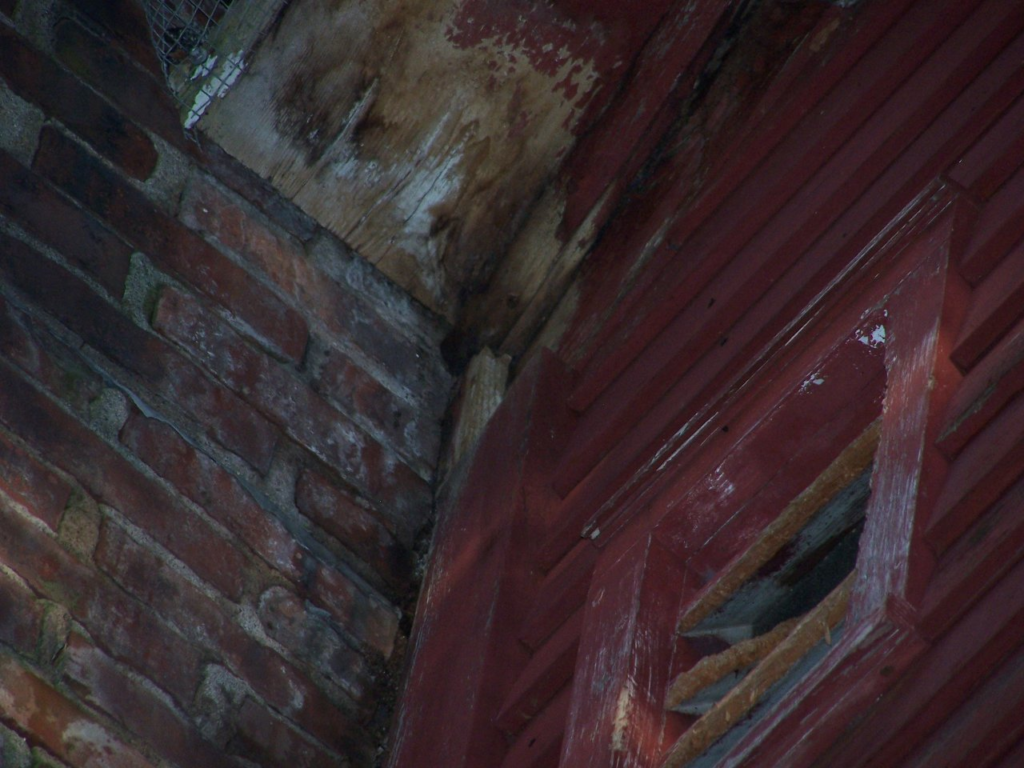
Why Rodent Problems Keep Coming Back
Rodent problems usually return because the structure is still open somewhere. Traps and bait can reduce the active population, but new mice and rats will continue entering if the original access points are not properly identified and sealed.
One of the biggest reasons rodent infestations are difficult to eliminate is because mice and rats constantly leave behind scent trails as they travel through the structure. Rodents urinate and defecate continuously while moving through walls, crawlspaces, attics, garages, basements, utility lines, and hidden travel routes.
As rodents travel, they leave behind pheromone trails and scent markers that help other rodents follow the same paths repeatedly. Even extremely small or difficult-to-find entry points can remain active because new mice and rats continue following these established scent routes back into the structure.
This is why rodent infestations often continue even after some mice or rats have been trapped. If the original entry gap remains open, new rodents can continue locating the same pathway by following urine trails, grease marks, body oils, droppings, and established travel routes already created inside the building.
In many Connecticut homes, the actual rodent entry point may be surprisingly small and difficult to locate. Mice commonly use tiny foundation gaps, garage door corners, utility penetrations, crawlspace vents, roofline openings, siding transitions, bulkhead gaps, and hidden construction defects that homeowners rarely notice.
Over time, rodents create heavily traveled pathways inside walls, attic insulation, basements, crawlspaces, garages, and utility spaces. These travel routes often contain droppings, urine staining, greasy rub marks, nesting debris, and contamination buildup from repeated activity.
Rodents also reproduce quickly, which allows infestations to rebound rapidly when even a small number of mice or rats continue accessing the structure. A property may appear rodent-free temporarily after trapping or baiting, only for activity to return again weeks later because the access point and scent trails were never fully addressed.
Many recurring rodent infestations are caused by:
- Foundation gaps left open
- Garage door gaps and damaged weather stripping
- Unsealed utility penetrations
- Damaged crawlspace vents
- Roofline gaps and attic entry points
- Food sources around trash, bird seed, pet food, or compost
- Backyard chicken feed and exterior feeding areas
- Cluttered storage areas and nesting conditions
- Exterior burrows near foundations, sheds, or retaining walls
- Old scent trails and established rodent travel routes
- Incomplete exclusion work
Rodent cleanup and sanitization are also important because contaminated nesting areas, droppings, and urine trails may continue attracting rodent activity long after the original infestation began.
The best rodent control plan combines population reduction, exclusion work, sanitation, cleanup, odor reduction, food-source correction, and long-term prevention designed to stop rodents from repeatedly re-establishing activity inside the structure.
Rodent Control for Homes, Garages, Attics, Crawlspaces & Businesses
Rodents can affect many types of properties throughout Connecticut. Mice may start in garages, basements, crawlspaces, and attics before moving into living areas. Rats are often tied to exterior food sources, burrows, dumpsters, sheds, crawlspaces, and lower-level access points.
We provide rodent control for:
- Homes
- Garages
- Attics
- Crawlspaces
- Sheds
- Restaurants and food-related businesses
- Warehouses
- Apartment buildings
- Commercial facilities
Frequently Asked Questions About Rodent Control
Do you handle both mice and rats?
Yes. Floyd’s Pest & Wildlife Control provides mouse control, rat control, trapping, baiting programs, exclusion, cleanup, and prevention services.
Do you offer baiting programs?
Yes. Because Floyd’s Pest & Wildlife Control has a pest control license, baiting programs can be used where appropriate as part of a rodent control plan.
What rodents are most common in Connecticut homes?
We most commonly deal with deer mice, house mice, and Norway rats. Wood rats are less common in typical Connecticut structure work.
Can mice carry hantavirus?
Deer mice are associated with hantavirus concerns, so rodent droppings, urine, saliva, and nesting material should be handled carefully.
Should I vacuum mouse droppings?
No. Dry rodent droppings should not be swept or vacuumed because contaminated dust can become airborne. Cleanup should be done with proper precautions and disinfectant.
Why do mice keep coming back?
Mice usually keep returning because entry points remain open. Trapping or baiting alone does not solve the structural access problem.
How do rats get into homes?
Rats commonly use foundation openings, crawlspace access points, garage gaps, burrows, damaged vents, and structural openings near ground level.
Do you seal rodent entry points?
Yes. We provide rodent exclusion services including sealing foundation gaps, utility penetrations, garage gaps, crawlspace vents, and other access points.