
Woodchuck Removal in Connecticut
Floyd’s Pest & Wildlife Control provides professional woodchuck removal, trapping, den inspections, exclusion, and prevention services throughout Connecticut.
Woodchucks commonly dig underneath sheds, decks, porches, foundations, barns, retaining walls, and outbuildings while also damaging lawns, gardens, landscaping, and agricultural properties.
Call/Text 860-319-3216Woodchuck Removal & Burrow Control Services
Floyd’s Pest & Wildlife Control provides professional woodchuck removal and burrow control services throughout Connecticut. In Connecticut, these animals are commonly called both woodchucks and groundhogs. They are the same animal, although most homeowners in Connecticut tend to use the name “woodchuck.”
Despite the old rhyme, woodchucks do not actually “chuck” wood. They are large burrowing rodents known for creating extensive underground tunnel systems around homes, farms, barns, sheds, retaining walls, gardens, and landscaped properties.
Woodchucks commonly dig underneath:
- Sheds and outbuildings
- Decks and porches
- Foundations and slabs
- Retaining walls
- Barns and horse properties
- Fence lines and field edges
- Garden areas and landscaping
Many Connecticut woodchuck problems begin when a burrow system expands underneath a structure or into an area where digging starts causing structural concerns, soil collapse, tripping hazards, drainage issues, or ongoing landscape damage.
Woodchucks are especially common around properties that border woods, open fields, overgrown vegetation, or agricultural areas where they have easy access to food and safe digging conditions.
On horse farms and agricultural properties, burrows can become a serious safety concern because hidden holes may create dangerous footing conditions for horses, livestock, equipment, and people walking the property.
Long-term woodchuck control often requires more than trapping alone. Once the animal is removed, the burrow area frequently needs to be reinforced, screened, or properly secured to help prevent future digging activity in the same location.
Professional Woodchuck Removal Services
Floyd’s Pest & Wildlife Control provides professional woodchuck trapping, burrow inspections, exclusion, and prevention services throughout Connecticut. Woodchuck problems often involve active burrow systems underneath structures, around retaining walls, near barns, or throughout landscaped and agricultural properties.
Many Connecticut woodchuck jobs involve more than simply removing the animal. Burrow systems can continue creating property damage long after the woodchuck is gone if the area is not properly reinforced or secured.
We provide woodchuck and groundhog control services for:
- Woodchuck trapping and removal
- Groundhog inspections
- Active burrow inspections
- Under-shed woodchuck removal
- Deck and porch burrow removal
- Barn and outbuilding woodchuck removal
- Retaining wall burrow inspections
- Foundation and slab inspections
- Horse pasture and farm inspections
- Garden and landscape protection
- Burrow collapse and trip hazard inspections
- Woodchuck exclusion and trench screening
- Fence and barrier recommendations
- Wildlife prevention services
Long-term woodchuck control focuses on stopping repeated burrowing activity around structures and reducing the conditions that make the property attractive for future digging.
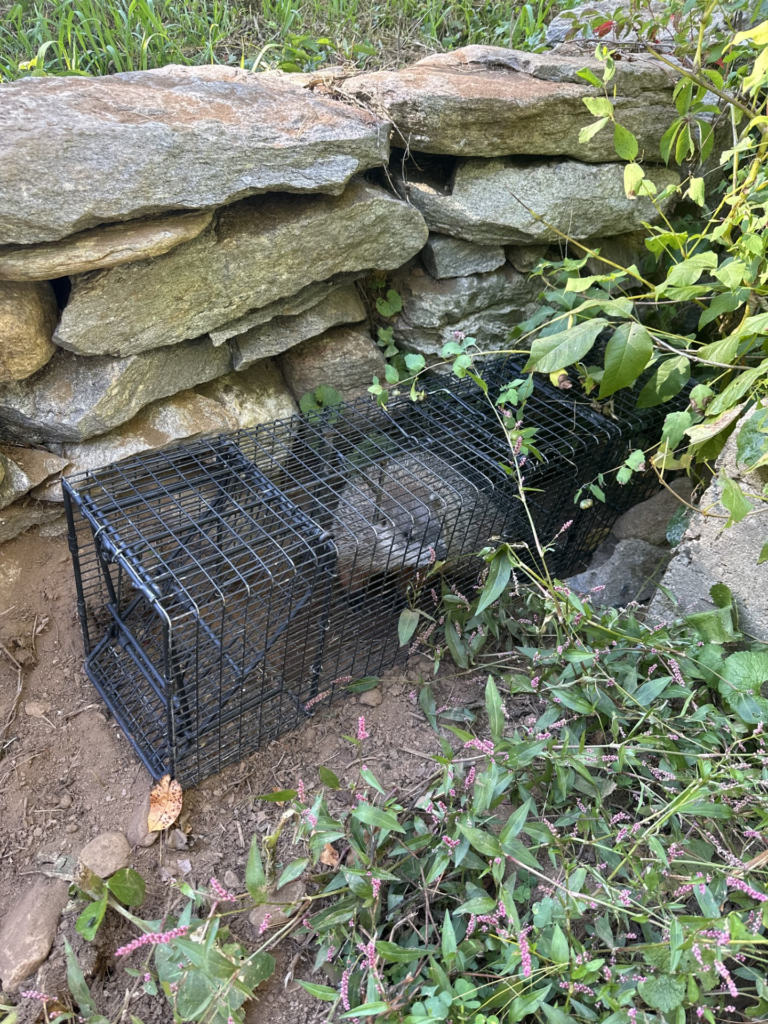
Why Woodchucks Choose Connecticut Properties
Woodchucks thrive around Connecticut homes, farms, gardens, and landscaped properties because human environments provide easy food sources and ideal digging conditions.
Unlike many nuisance wildlife species, woodchucks spend much of their time underground. They create extensive burrow systems that provide shelter, temperature protection, escape routes, and safe denning areas.
Woodchucks commonly choose properties with:
- Soft soil conditions
- Open grassy areas
- Gardens and landscaping
- Field edges and fence lines
- Structures with protected digging areas
- Low human disturbance during daytime
- Nearby vegetation for feeding
Many woodchuck burrows are located directly against structures because foundations, decks, sheds, slabs, retaining walls, and porches provide overhead protection while helping stabilize the burrow system.
During spring and early summer, woodchucks are often strongly tied to the main den site while raising young. As summer progresses, however, woodchucks frequently expand their movement patterns and begin feeding farther from the primary burrow.
In many Connecticut neighborhoods, woodchucks gradually shift activity toward the best available food source — which is often a homeowner’s backyard garden. Vegetable gardens, flower beds, landscaping plants, berry patches, and irrigated lawns can attract woodchucks from surprisingly long distances during mid and late summer.
It is not unusual for a woodchuck to feed in one yard regularly while maintaining the primary burrow underneath a nearby shed, deck, retaining wall, or wooded edge on a neighboring property.
This is one reason homeowners sometimes suddenly notice daytime woodchuck activity around gardens even though the actual burrow may be located several properties away.
Once a woodchuck establishes a successful burrow and reliable feeding pattern, the activity often continues until the animal is removed and the area is properly secured.
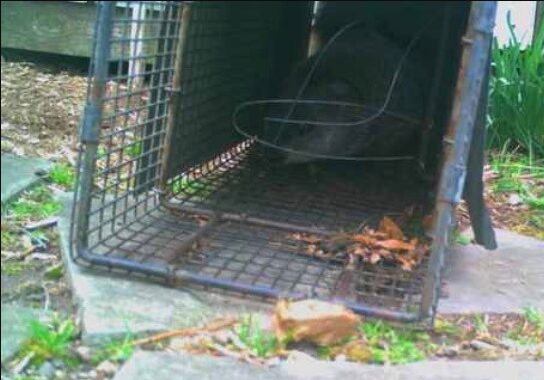
Common Woodchuck Damage Around Homes, Farms & Commercial Properties
Many Connecticut homeowners underestimate how much damage a woodchuck burrow system can eventually create. While woodchucks are often viewed as harmless backyard animals, active burrows can become serious structural, landscaping, and safety problems when digging continues around homes, barns, retaining walls, walkways, and other developed areas.
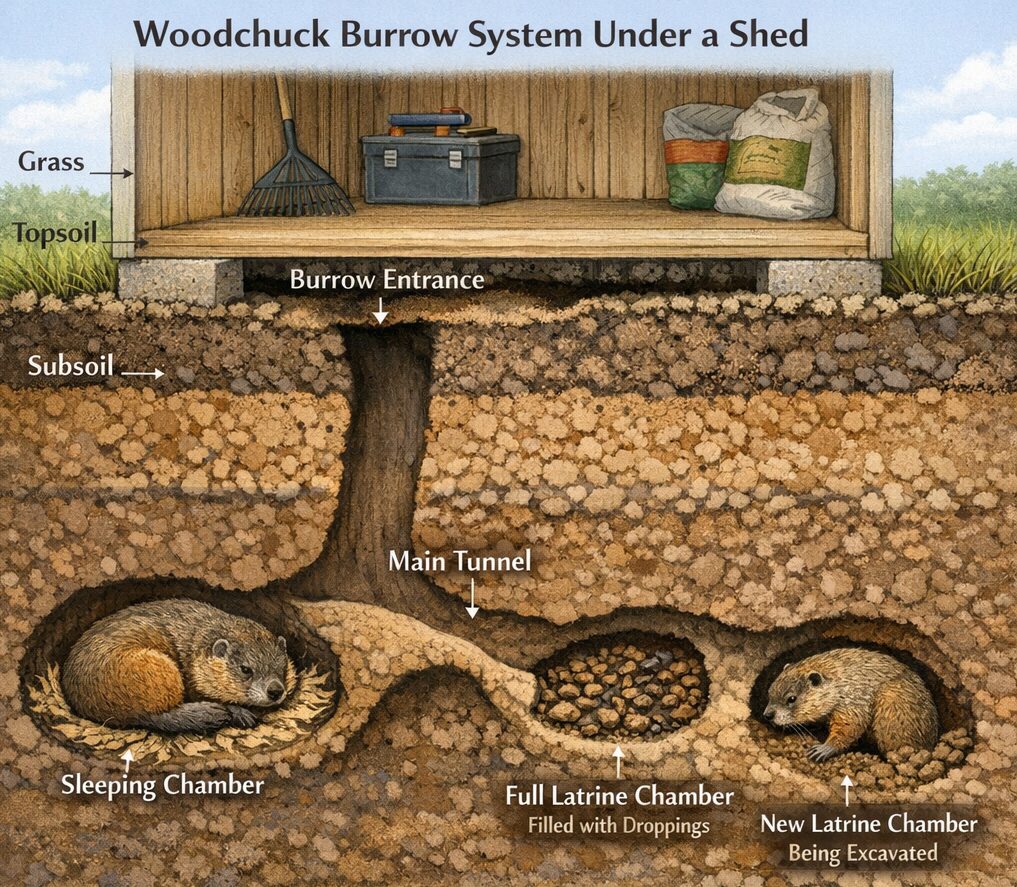
Woodchucks spend much of their lives underground and continuously maintain and expand tunnel systems over time. A single burrow may contain multiple entrances, escape routes, feeding access points, and underground chambers.
Common Connecticut woodchuck damage includes:
- Large burrow holes throughout lawns
- Digging underneath sheds and decks
- Burrowing around foundations and slabs
- Undermining retaining walls
- Collapse risk near walkways and patios
- Trip hazards around hidden burrow entrances
- Garden and landscaping destruction
- Crop damage on farms and agricultural properties
- Fence line and pasture damage
- Soil erosion around burrow systems
- Damage around barns and outbuildings
- Unsafe footing conditions for horses and livestock
On residential properties, woodchucks commonly damage vegetable gardens, flowers, shrubs, and landscaping while also weakening soil around structures through repeated digging activity.
Commercial properties can experience problems as well, especially around landscaped islands, sidewalks, retaining walls, banks, office buildings, storage facilities, and parking lot edges where burrow systems may go unnoticed for long periods.
One of the biggest concerns with woodchucks is that much of the damage happens underground where property owners cannot immediately see the extent of the tunnel system. By the time surface collapse or walkway instability becomes visible, the burrow may already extend deep underneath the structure or surrounding soil.
Woodchuck problems often continue getting worse until the animal is removed and the burrow area is properly reinforced or secured.
Signs You May Have a Woodchuck Problem
- Large holes near structures or fence lines
- Mounds of fresh dirt outside burrow openings
- Woodchuck sightings during daytime
- Damage to gardens or landscaping
- Burrows underneath sheds, decks, or porches
- Chewed vegetation and plants
- Collapsing soil around structures
- Trails leading into tall grass or wooded edges
- Livestock avoiding areas with holes
Woodchucks are mostly active during daylight hours, especially during morning and evening periods when they leave the burrow to feed.
Where Woodchucks Commonly Dig Burrows
| Burrow Area | Why Woodchucks Use It |
|---|---|
| Decks and porches | Protected overhead cover helps conceal the burrow entrance. |
| Sheds and barns | Structures provide shade, protection, and stable soil conditions. |
| Retaining walls | Walls create stable digging conditions and natural cover. |
| Fence lines | Fence edges often border feeding areas and open travel routes. |
| Pastures and field edges | Open visibility allows woodchucks to detect predators while feeding. |
Baby Woodchucks & Spring Burrow Activity
Spring is peak baby woodchuck season in Connecticut. Female woodchucks often become much more active around properties during this time as they maintain burrows and search for food close to the den site.
Young woodchucks usually remain underground for several weeks before beginning to emerge outside the burrow. Homeowners often first notice increased daytime activity around decks, sheds, retaining walls, gardens, or fence lines during this period.
This changes the removal strategy because active nursery burrows may contain dependent young underground. Simply collapsing or sealing a burrow too early can create additional problems if animals are still inside.
A proper inspection helps determine:
- If the burrow is actively being used
- Whether young may be present
- How extensive the tunnel system is
- Which entrances are active
- When exclusion or trench work can safely be completed
The goal is to remove the woodchucks safely while helping prevent future burrowing activity around the structure.
Our Woodchuck Removal & Exclusion Process
1. Property & Burrow Inspection
We inspect the property to identify active burrow systems, feeding areas, travel routes, structural risks, and potential den locations.
2. Determine Burrow Activity
We determine whether the burrow is actively being used and whether young may be present underground.
3. Remove the Woodchucks
Depending on the situation, removal may involve trapping, burrow monitoring, or other wildlife control methods based on the property layout and activity level.
4. Secure the Burrow Area
After removal, the area may require trench screening, exclusion work, soil reinforcement, or structural protection to help prevent future burrowing.
5. Long-Term Prevention
Long-term woodchuck prevention often includes reducing easy shelter areas, reinforcing vulnerable locations, improving exclusion around structures, and monitoring recurring digging areas.
Call or text 860-319-3216 for professional woodchuck removal and burrow control services in Connecticut.
Woodchuck Exclusion & Burrow Prevention
One of the biggest mistakes homeowners make is removing the woodchuck without correcting the area that allowed the burrow to develop in the first place.
Woodchucks are persistent diggers and commonly reuse favorable locations underneath decks, sheds, porches, retaining walls, and barns if the area remains accessible.
Long-term prevention may involve:
- Trench screening
- Buried exclusion barriers
- Reinforcing shed or deck perimeters
- Closing gaps beneath structures
- Soil reinforcement around foundations
- Fence improvements
- Vegetation management
Without exclusion work, another woodchuck may eventually reopen the same area or begin digging nearby.
Woodchuck Removal for Farms, Horse Properties & Landscaped Yards
Woodchuck problems can become especially serious on farms, horse properties, and heavily landscaped residential yards where burrow systems create safety hazards and ongoing property damage.
Horse pastures are particularly vulnerable because hidden burrow holes can create dangerous footing conditions for livestock.
We provide woodchuck removal services for:
- Residential homes
- Horse farms
- Pastures
- Barns and outbuildings
- Commercial properties
- Gardens and landscaped yards
- Retaining wall areas
- Sheds and decks
- Agricultural properties
Real Connecticut Woodchuck Problem: Bank Walkway Collapse Hazard
One Connecticut woodchuck job involved a commercial bank where an active burrow system had expanded underneath part of a customer walkway near landscaped areas along the building.
The woodchuck had been digging underneath the sidewalk edge and nearby retaining area long enough that sections of soil underneath the walkway became unstable. Before the property manager contacted us, a customer reportedly stepped into a weakened area near the edge of the walkway, fell, and was injured.
Situations like this are more common than many people realize. Woodchuck burrows can become surprisingly extensive underground, especially around:
- Retaining walls
- Sidewalks
- Patios
- Bank landscaping
- Commercial foundations
- Parking lot islands
- Sheds and slabs
Commercial properties are especially vulnerable because woodchucks often use landscaped edges, decorative shrubs, retaining walls, and low-traffic perimeter areas where burrow activity may go unnoticed for long periods.
On this particular job, the woodchuck had created multiple tunnel entrances around the landscaped edge of the property while feeding nearby during daylight hours.
After removal, the focus shifted toward identifying the full extent of the burrow system and helping prevent future collapse issues around the affected walkway area.
Woodchuck problems are not always just nuisance wildlife problems. In some situations, burrow systems can create legitimate structural and liability concerns around homes, businesses, walkways, retaining walls, and agricultural properties.
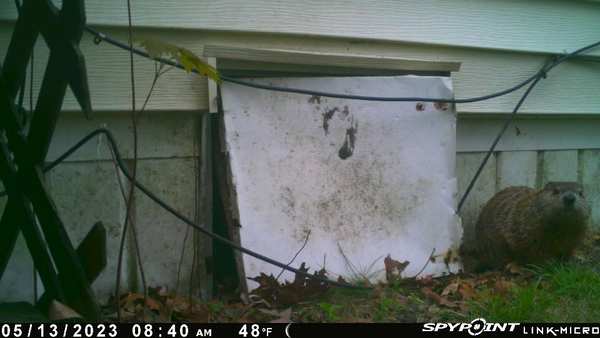
Frequently Asked Questions About Woodchuck Removal
Do woodchucks dig under sheds and decks?
Yes. Woodchucks commonly burrow underneath sheds, decks, porches, and other structures for protection.
Are woodchucks dangerous to foundations?
Burrow systems can undermine soil around structures, retaining walls, slabs, and walkways over time.
When are woodchucks most active?
Woodchucks are primarily active during daylight hours, especially morning and evening.
Do woodchucks damage gardens?
Yes. Woodchucks commonly feed on vegetables, landscaping plants, flowers, and garden vegetation.
Can woodchuck burrows create hazards for horses?
Yes. Burrow holes can create dangerous footing conditions in horse pastures and agricultural areas.
Will another woodchuck move into the same burrow?
If the area remains favorable and accessible, another woodchuck may eventually reuse the same location.
Do you provide woodchuck exclusion services?
Yes. We provide trench screening, exclusion barriers, and structural protection services to help prevent future burrowing.
How large can woodchuck burrows become?
Woodchuck tunnel systems can become extensive over time and often contain multiple entrances and escape routes.
Woodchuck Removal Service Areas in Connecticut
Floyd’s Pest & Wildlife Control provides professional woodchuck removal, groundhog trapping, burrow inspections, exclusion, and prevention services throughout Connecticut. We are actively building dedicated county and town wildlife removal pages across the state.
New London County
Woodchuck removal services throughout southeastern Connecticut including farms, shoreline properties, gardens, and wooded residential areas.
View New London County Service Areas →Middlesex County
Professional woodchuck trapping and burrow control services throughout Middlesex County and Connecticut River towns.
View Middlesex County Service Areas →Hartford County
Woodchuck removal and exclusion services for Hartford County homes, horse properties, retaining walls, and commercial properties.
View Hartford County Service Areas →New Haven County
Groundhog and woodchuck removal services throughout New Haven County including suburban neighborhoods and agricultural areas.
View New Haven County Service Areas →Fairfield County
Woodchuck trapping and burrow control services throughout Fairfield County residential, commercial, and landscaped properties.
View Fairfield County Service Areas →Related Wildlife Removal Services
Many Connecticut properties dealing with woodchucks and groundhogs also experience problems involving raccoons, skunks, squirrels, rodents, and other nuisance wildlife due to shared shelter areas, structural weaknesses, and landscape conditions.
Stop Woodchuck Problems at the Source
Woodchuck problems are usually caused by open areas underneath structures, soft soil conditions, unmanaged vegetation, and properties that provide safe burrowing locations close to food sources.
Floyd’s Pest & Wildlife Control provides woodchuck trapping, den inspections, exclusion, trench screening, and prevention services throughout Connecticut.
Woodchuck Removal • Burrow Control • Exclusion
Call/Text 860-319-3216