Why Mouse & Rat Problems Are So Common in Groton
Groton has some of the strongest rodent pressure in southeastern Connecticut because the area combines dense residential neighborhoods, older housing stock, shoreline conditions, restaurants, marinas, commercial development, wooded habitat, crawlspaces, detached garages, and year-round food availability.
Rodent activity is common throughout Groton, Groton City, Mystic, Noank, and surrounding shoreline communities because mice and rats can move easily between dumpsters, restaurants, storm drains, wooded areas, garages, crawlspaces, sheds, and nearby homes.
Groton’s large and constantly changing population connected to the submarine base, Electric Boat, military housing, apartments, rentals, restaurants, and waterfront commercial areas also creates constant movement of food sources, storage materials, dumpsters, vehicles, and structural activity that rodents take advantage of.
Many people are surprised by how adaptable and capable rodents in Connecticut actually are. Different rodent species behave very differently, which is one reason infestations are often misunderstood until they become severe.
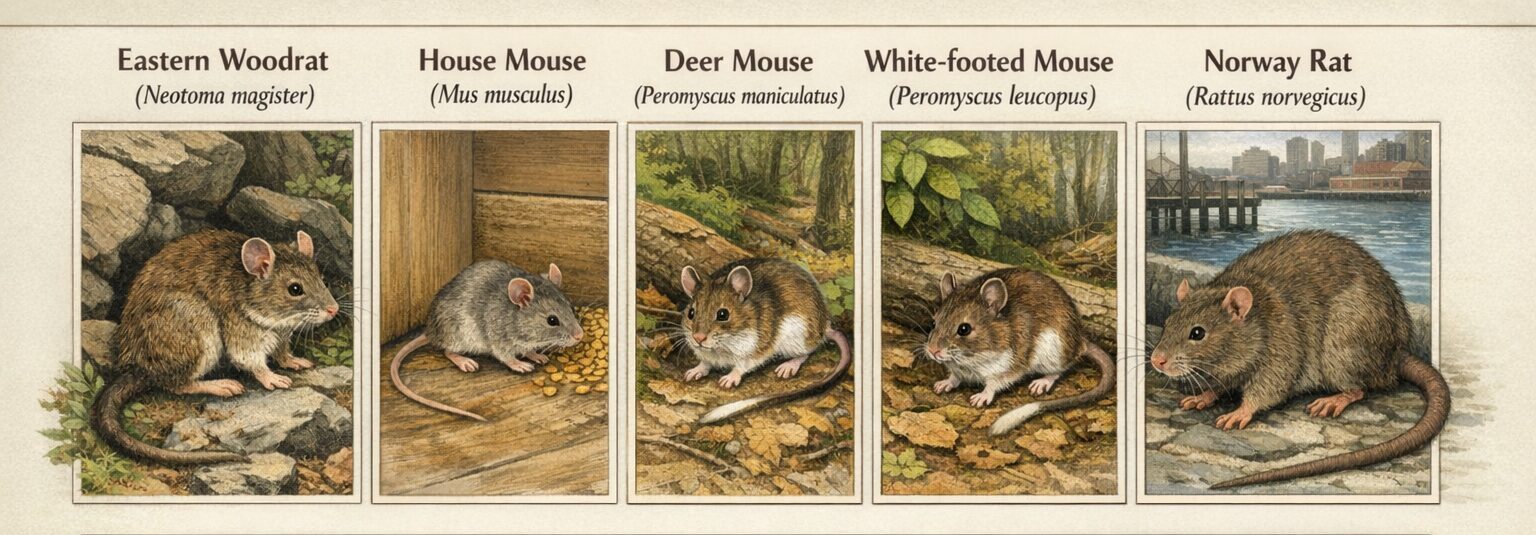
Both mice and rats are active throughout the Groton area including:
- House mice
- Deer mice
- White-footed mice
- Norway rats
Deer mice and white-footed mice are excellent climbers and commonly access attics by traveling along utility lines, AC lines, pipes, vines, garages, rough siding, and overhanging tree limbs before entering roofline gaps and attic vents.
House mice are highly adaptable indoor rodents that commonly spread through kitchens, basements, garages, wall voids, storage spaces, and crawlspaces.
Norway rats are especially common near dumpsters, commercial areas, restaurants, garages, marinas, waterfront structures, and dense residential neighborhoods. These rats commonly burrow beneath foundations, sheds, slabs, retaining walls, and crawlspaces before eventually entering the structure.
Older homes and shoreline structures throughout Groton commonly develop gaps around foundations, siding, rooflines, utility penetrations, crawlspaces, and attic areas that allow rodents to enter.
Many rodent infestations begin outside the structure before spreading into basements, crawlspaces, garages, attic spaces, and wall voids.
Properties throughout Groton commonly contain:
- Crawlspaces and unfinished basements
- Detached garages and sheds
- Older foundations and utility penetrations
- Dense vegetation and woodlines
- Dumpster and restaurant pressure
- Attic spaces and older rooflines
These conditions allow rodent populations to remain active year-round throughout many Groton neighborhoods.
Floyd’s Pest & Wildlife Control provides mouse control, rat control, rodent inspections, exterior baiting programs, attic evaluations, crawlspace inspections, exclusion work, contamination cleanup recommendations, and long-term rodent prevention services throughout Groton and surrounding New London County communities.
Mouse Control in Groton, CT
Mouse infestations are extremely common throughout Groton because older homes, crawlspaces, garages, attics, marinas, shoreline neighborhoods, restaurants, and wooded residential areas create ideal conditions for mice year-round.
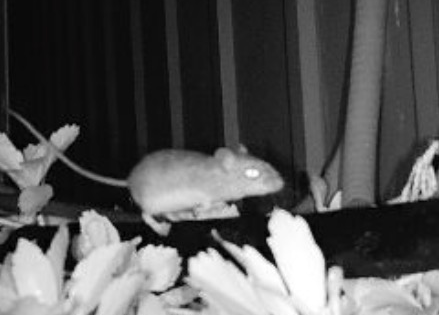
House mice, deer mice, and white-footed mice are all active throughout Groton and surrounding shoreline communities. Deer mice and white-footed mice are especially common near wooded property edges and undeveloped areas, while house mice are more common around dense residential and commercial structures.
Mice are capable of entering structures through surprisingly small openings. Many infestations begin around utility penetrations, garage corners, crawlspace vents, siding gaps, attic vents, and roofline separations.
Common mouse entry points include:
- Foundation cracks and sill plate gaps
- Crawlspace vents and basement penetrations
- Garage door corners and weather stripping gaps
- Roofline openings and attic vent gaps
- Utility line penetrations
- Loose siding and construction separations
Once mice establish activity inside the structure, infestations often spread quickly through wall voids, attic insulation, basements, crawlspaces, garages, and storage areas.
Many homeowners first notice mouse problems after hearing scratching sounds at night, finding droppings in cabinets or garages, smelling strong musky odors, or discovering chewed food packaging and nesting material.
Common signs of mouse activity include:
- Droppings inside cabinets, attics, basements, or garages
- Scratching sounds in ceilings and walls
- Chewed insulation, cardboard, or stored belongings
- Strong musky or ammonia-like odor
- Nesting material in hidden areas
- Mouse sightings near foundations or garages
Mice commonly contaminate attic insulation, crawlspaces, storage areas, and wall voids with droppings and urine. Over time this contamination can create strong odor and sanitation concerns throughout the structure.
Long-term mouse control usually requires more than trapping alone. Successful control often involves identifying entry points, reducing exterior rodent pressure, sealing structural gaps, and preventing mice from repeatedly entering the building.
Floyd’s Pest & Wildlife Control provides mouse inspections, trapping, exclusion work, exterior baiting programs, attic evaluations, crawlspace inspections, and long-term mouse prevention services throughout Groton.
Learn more about our rodent control services.
Rat Control in Groton, CT
Rat activity has become increasingly common throughout Groton and surrounding shoreline communities because dense neighborhoods, restaurants, dumpsters, garages, marinas, storm drains, older buildings, and year-round food sources create ideal conditions for rat populations.
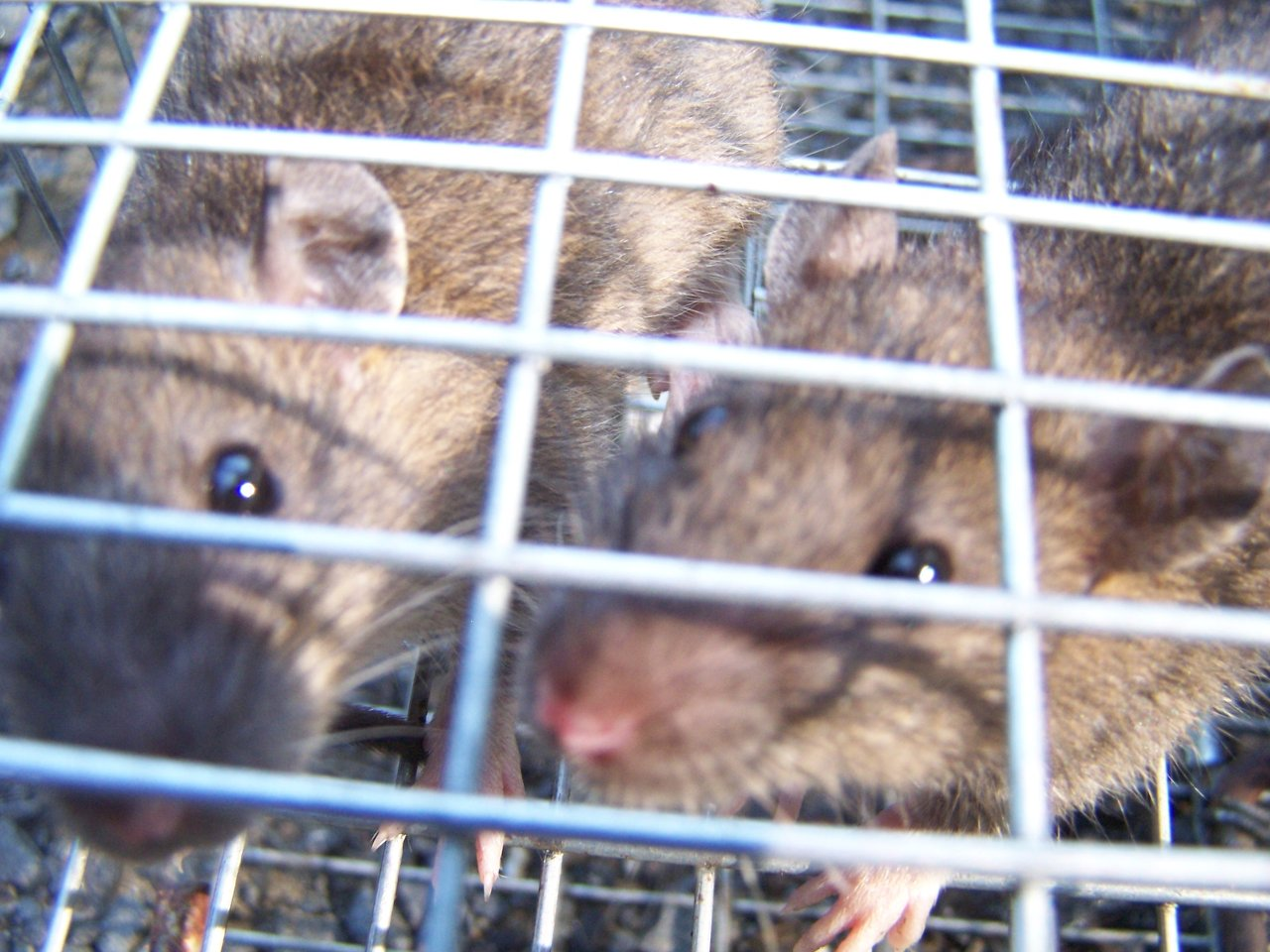
Norway rats are the primary rat species found throughout Groton. These rats commonly burrow beneath foundations, sheds, garages, retaining walls, dumpsters, decks, and commercial structures before eventually entering homes and buildings.
Groton’s combination of residential density, shoreline infrastructure, wooded habitat, and commercial activity allows rats to move easily between outdoor harborage areas and nearby structures.
Rats commonly enter structures through:
- Foundation gaps and crawlspaces
- Garage door corners and utility penetrations
- Broken vents and damaged siding
- Drainage openings and lower structural gaps
- Dumpster and commercial areas
- Older basements and storage spaces
Common signs of rat activity include:
- Large rodent droppings
- Heavy scratching or movement sounds
- Gnaw marks on wood, wiring, or pipes
- Burrows near structures or foundations
- Grease marks along travel routes
- Strong rodent odor in enclosed spaces
Rat infestations can become serious structural and sanitation problems because rats chew wiring, damage insulation, contaminate enclosed spaces, and spread activity throughout basements, crawlspaces, attics, and wall voids.
Rats are also capable of chewing through soft materials, damaged wood, plastic, and some low-grade construction materials while expanding access into structures.
Floyd’s Pest & Wildlife Control provides rat inspections, trapping, exterior baiting programs, exclusion work, structural sealing, crawlspace inspections, attic inspections, and long-term rat prevention services throughout Groton and New London County.
For broader wildlife issues throughout the area, visit our Groton wildlife removal page or our New London County wildlife removal page.
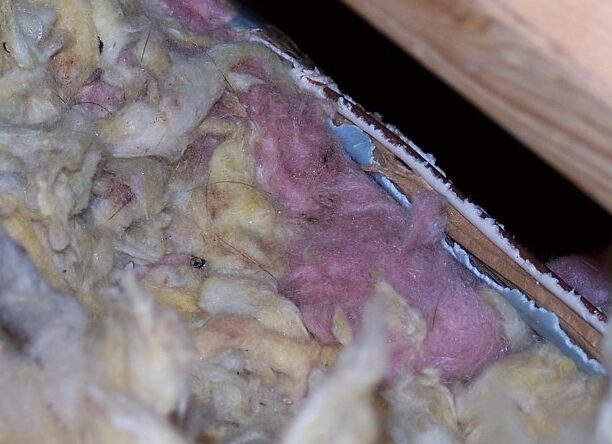
Rodent Damage Inside Homes & Buildings
Rodent infestations often become much more serious than homeowners initially realize because mice and rats commonly spread activity throughout hidden structural areas before they are discovered.
Once rodents establish activity inside a structure, they may contaminate attics, crawlspaces, garages, basements, insulation, wall voids, and storage areas with droppings, urine, nesting material, and strong odor.
Rodents are also capable of causing expensive structural damage over time.
Common rodent damage includes:
- Chewed electrical wiring
- Damaged attic insulation
- Contaminated crawlspaces and storage areas
- Chewed cardboard and stored belongings
- Damage around pipe penetrations and vents
- Nesting material inside walls and ceilings
Chewed electrical wiring is one of the most serious problems associated with rodent infestations because exposed wiring may create fire hazards inside walls, ceilings, attics, and crawlspaces.
Many homeowners in Groton first discover extensive infestations only after insulation contamination, strong odor, or structural damage becomes severe.
Floyd’s Pest & Wildlife Control provides rodent inspections, attic evaluations, crawlspace inspections, exterior baiting, exclusion work, contamination assessments, and recommendations for long-term rodent prevention throughout Groton.
Learn more about our mouse and rat control services.
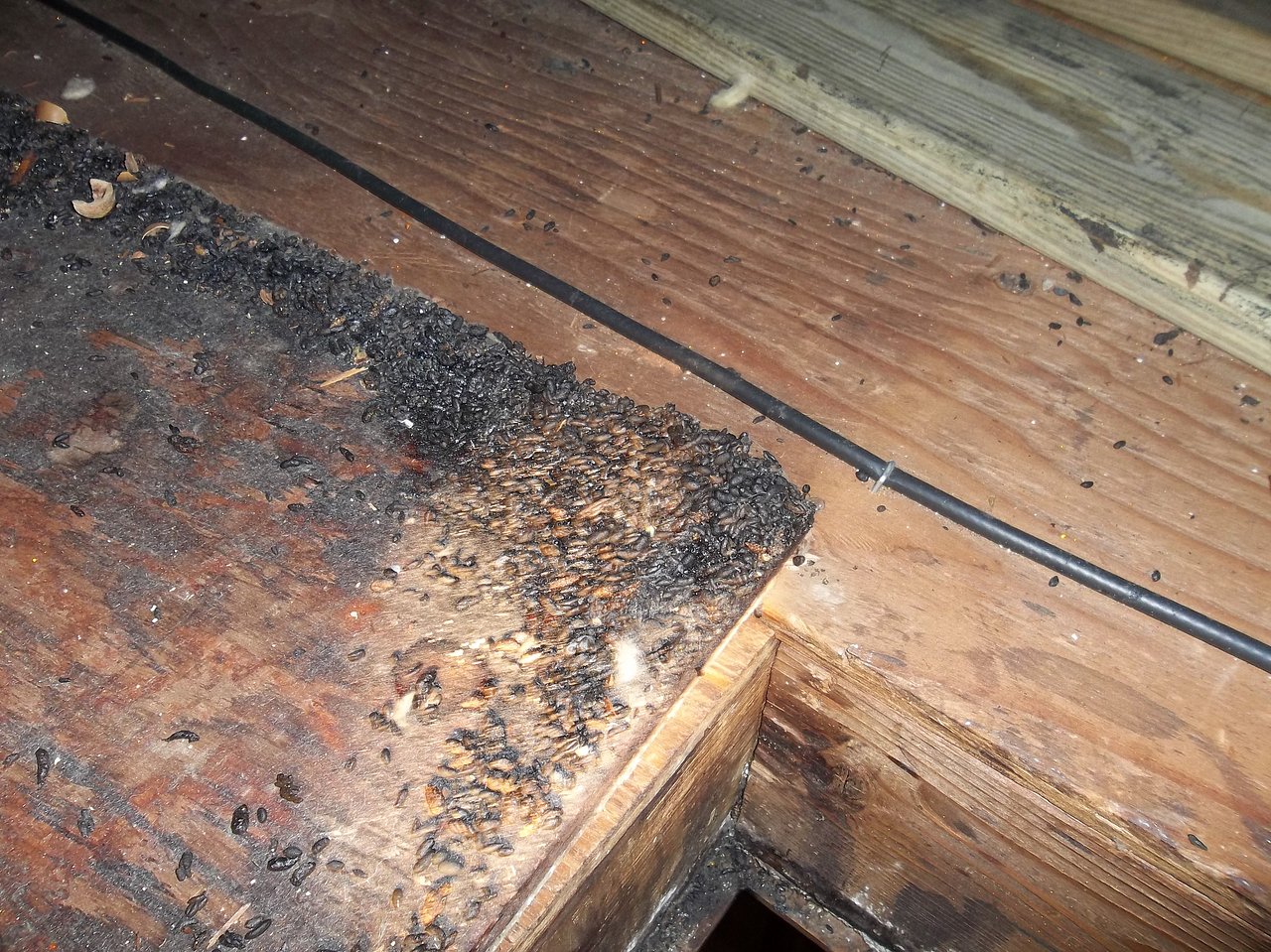
Attic Rodent Contamination in Groton Homes
One of the biggest problems with mouse and rat infestations is the amount of contamination rodents leave behind inside attic spaces, crawlspaces, wall voids, garages, and storage areas.
Many Groton homeowners are unaware of how extensive rodent activity has become until large amounts of droppings, odor, damaged insulation, and nesting material are discovered during an attic inspection.
Mice and rats commonly use attic insulation as protected nesting habitat because these areas are dark, warm, and rarely disturbed.
Over time, rodents may contaminate:
- Attic insulation
- Stored belongings and boxes
- HVAC ductwork areas
- Wall voids and ceiling cavities
- Crawlspaces and basement storage areas
- Garage ceilings and upper void spaces
Rodent droppings and urine can build heavily over time, especially in long-term infestations involving attic mice, flying squirrels, or rats.
Many infestations in Groton become recurring problems because rodents repeatedly return to the same attic spaces through hidden structural gaps around rooflines, attic vents, utility penetrations, and crawlspaces.
Strong rodent odor inside attics is often caused by:
- Large accumulations of droppings
- Urine saturation in insulation
- Dead rodents inside wall voids
- Nesting material and food storage
- Long-term hidden infestations
Recent national news involving hantavirus concerns has also increased awareness about the health risks associated with rodent droppings, urine, and nesting material inside enclosed spaces.
Floyd’s Pest & Wildlife Control provides attic evaluations, rodent inspections, exclusion work, exterior baiting programs, contamination assessments, and recommendations for long-term rodent prevention throughout Groton and New London County.
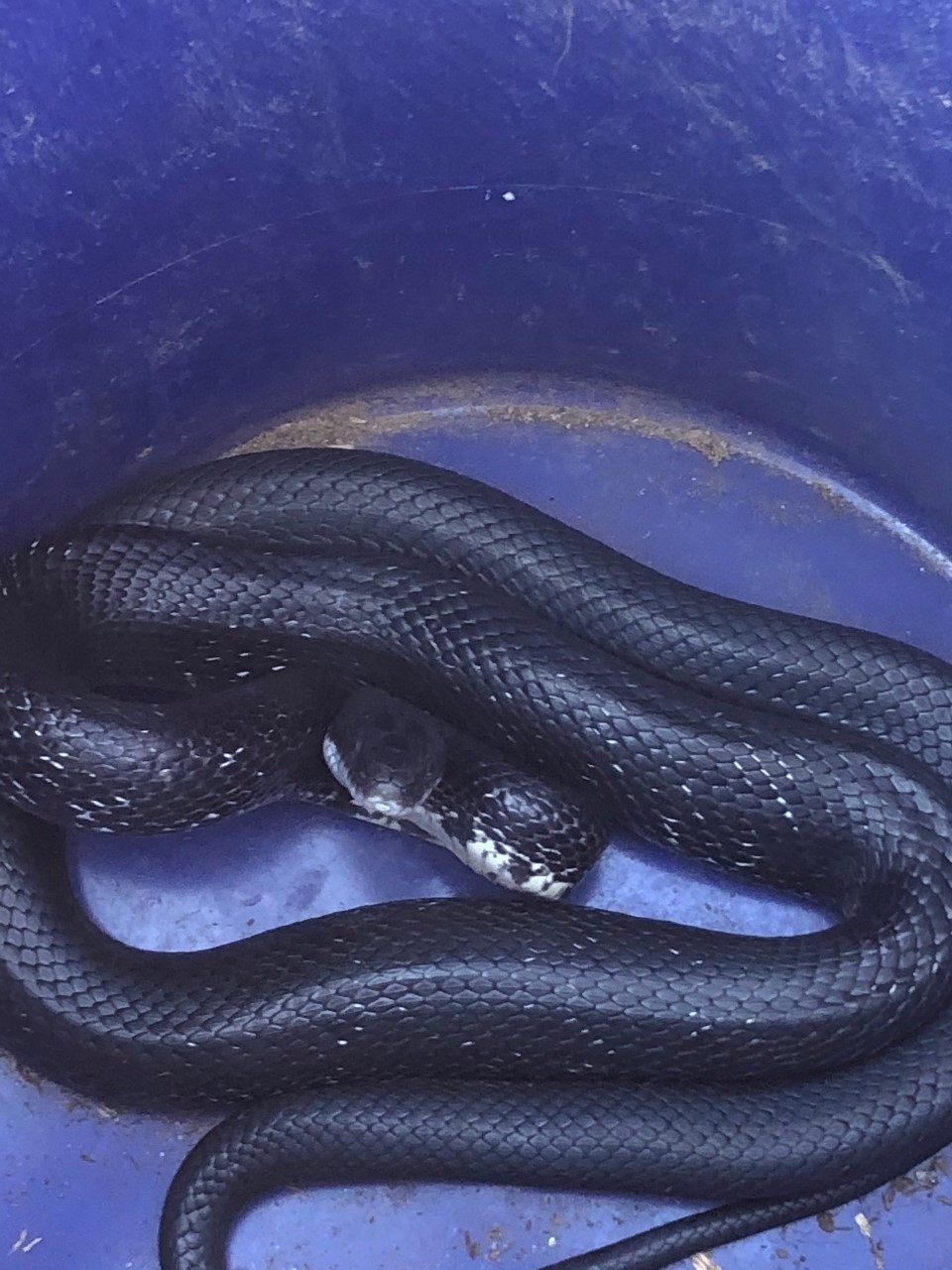
Why Ignoring Rodent Problems Usually Gets Worse
Many rodent infestations begin as occasional nighttime noises or a few droppings in a garage or basement. Unfortunately, rodent activity rarely stays small for long once mice or rats establish shelter inside the structure.
Mice and rats reproduce quickly and often expand activity into attics, wall voids, crawlspaces, garages, insulation, storage areas, and basements before homeowners fully realize how severe the infestation has become.
Ignoring rodent problems can eventually lead to:
- Heavy attic contamination
- Strong odor throughout the structure
- Chewed wiring and fire hazards
- Insulation damage and contamination
- Recurring infestations year after year
- Attracting other wildlife and predators
Homes with active rodent infestations may also begin attracting predators such as snakes searching for food sources.
In some situations, homeowners discover snakes inside garages, crawlspaces, basements, or lower structural areas after long-term mouse infestations become established.
Rodent infestations also become more difficult and expensive to correct once contamination spreads heavily through attic insulation, wall voids, crawlspaces, and hidden structural areas.
Many Groton homes contain crawlspaces, detached garages, attic spaces, and older structural gaps that allow rodent populations to remain hidden for extended periods.
Long-term rodent control focuses on solving the problem at the source by reducing rodent pressure, identifying structural entry points, sealing openings, and preventing recurring infestations.
Floyd’s Pest & Wildlife Control provides mouse control, rat control, rodent inspections, exclusion work, exterior baiting programs, attic evaluations, crawlspace inspections, and long-term rodent prevention services throughout Groton.
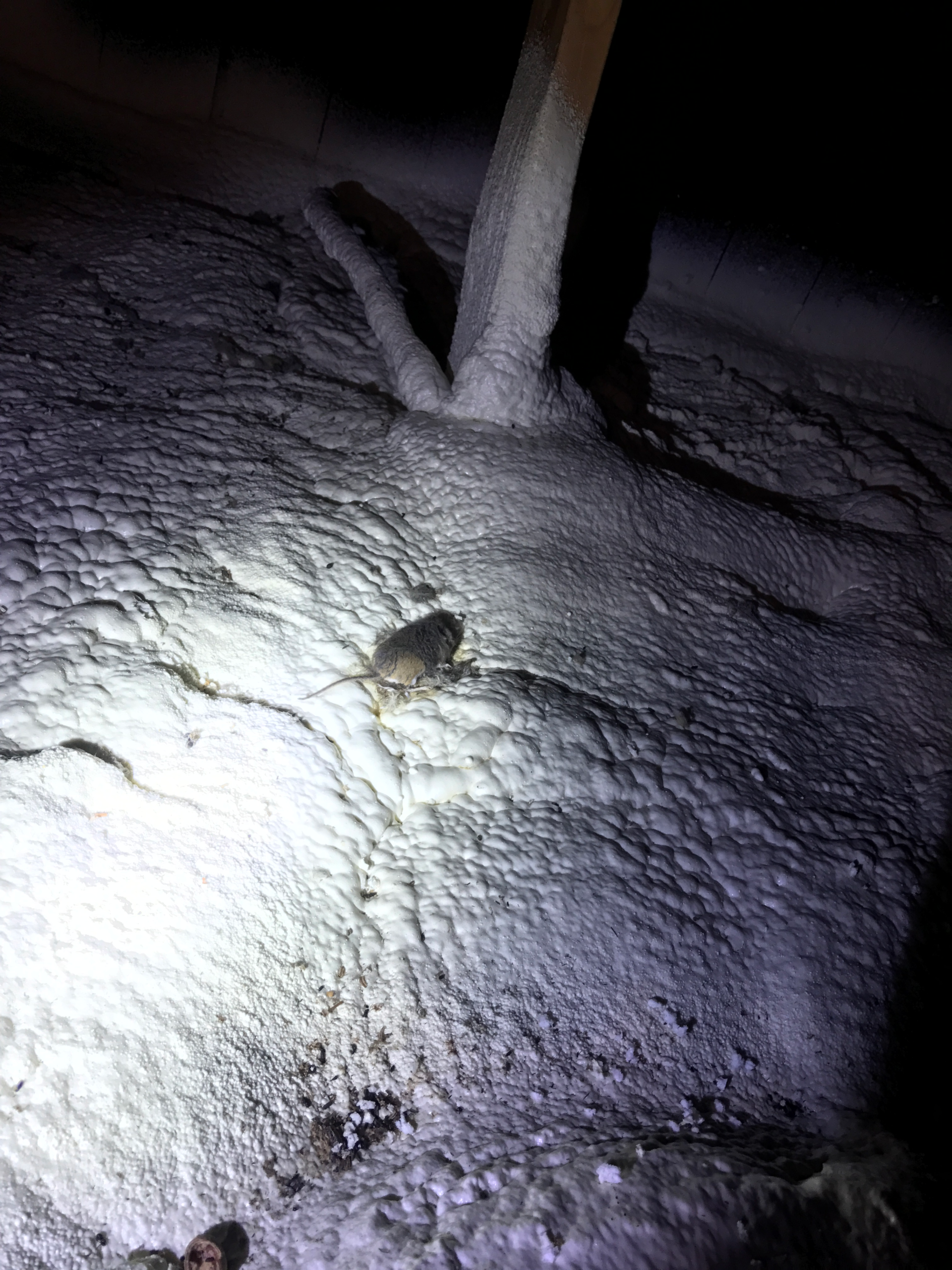
Dead Rodents, Odor Problems & Hidden Infestations
Many homeowners first realize they have a serious rodent problem after strong odor begins developing inside the home.
Dead mice and rats inside wall voids, attic insulation, crawlspaces, basements, and ceiling areas can create extremely strong odor problems, especially during warmer weather.
Rodents commonly die inside:
- Attic insulation
- Wall voids
- Crawlspaces
- Garage ceilings
- Basement ceilings
- Storage and utility areas
In many Groton homes, odor problems become worse because rodents continue entering through hidden structural gaps while older contamination remains inside the structure.
Common signs of hidden rodent infestations include:
- Persistent ammonia or musky odor
- Odor strongest near walls or ceilings
- Staining around vents or insulation
- Recurring scratching noises
- Sudden increase in flies near walls or attic areas
Simply removing one dead rodent often does not solve the larger infestation problem if active mice or rats are still entering the structure.
Long-term odor reduction typically requires addressing the active infestation, reducing contamination, correcting structural entry points, and preventing rodents from repeatedly returning.
Floyd’s Pest & Wildlife Control provides rodent inspections, attic evaluations, exclusion work, baiting programs, contamination assessments, and long-term rodent prevention services throughout Groton and surrounding New London County communities.
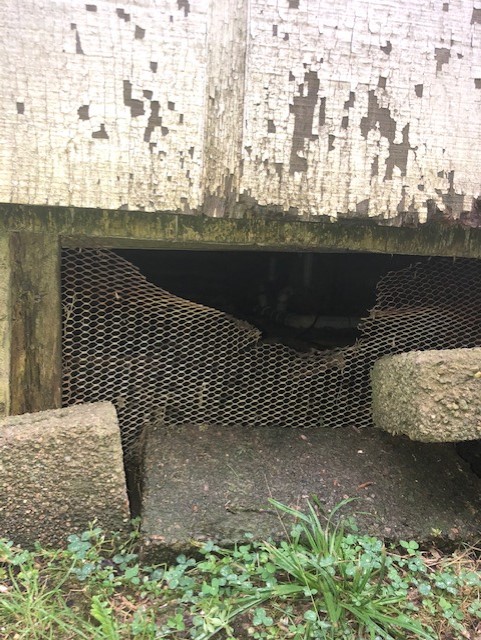
Large damaged foundation vent screen that rats were actively using to enter this Groton-area home. Lower structural openings like these are one of the most common recurring rat entry points in older Connecticut houses.
Rodent Exclusion & Mouse Proofing in Groton
Most recurring mouse and rat infestations in Groton happen because rodents continue finding access through hidden structural openings around the building.
Older homes, shoreline buildings, crawlspaces, garages, sheds, restaurants, and commercial properties throughout Groton commonly develop rodent entry points from aging materials, moisture exposure, settling foundations, utility penetrations, and structural deterioration over time.
Mice can enter through extremely small openings while rats commonly exploit lower structural gaps, crawlspaces, drainage areas, and damaged foundation sections.
Common rodent entry points include:
- Foundation gaps and sill plate separations
- Crawlspace vents and lower utility penetrations
- Garage door corners and weather stripping gaps
- Roofline gaps and attic vent openings
- Loose siding and construction separations
- Drainage and lower structural openings
Many Groton rodent infestations become year-round recurring problems because mice and rats repeatedly return to the same hidden access points unless exclusion work is completed properly.
Long-term rodent control usually works best when trapping, exterior baiting, structural repairs, and exclusion work are combined together.
Common exclusion services include:
- Sealing rodent entry points around foundations
- Securing crawlspace and attic openings
- Repairing soffits, siding, and vent gaps
- Reinforcing garage and shed entry areas
- Correcting utility penetration gaps
- Reducing recurring rodent access routes
Floyd’s Pest & Wildlife Control provides rodent proofing, exclusion work, structural inspections, exterior baiting programs, crawlspace inspections, and long-term rodent prevention services throughout Groton and New London County.
For additional rodent and wildlife services in the area, visit our Groton wildlife removal page, our New London County wildlife removal page, or our Connecticut rodent control page.
Common Mouse & Rat Problems in Groton, CT
| Problem | Common Areas | Typical Signs | Recommended Solution |
|---|---|---|---|
| Mouse Infestations | Attics, garages, crawlspaces, walls | Droppings, scratching, odor | Trapping and exclusion |
| Rat Activity | Basements, foundations, garages | Large droppings, gnawing, burrows | Exterior baiting and trapping |
| Attic Contamination | Insulation and ceiling voids | Droppings, odor, nesting material | Inspection and contamination assessment |
| Chewed Wiring | Attics, garages, crawlspaces | Bare wire and gnaw marks | Rodent removal and exclusion |
| Recurring Rodent Problems | Older homes and crawlspaces | Repeated infestations | Structural sealing and prevention |
Additional Mouse & Rat Services in Groton, CT
Rodent infestations often involve much more than simply trapping mice or rats. Many infestations spread through attics, crawlspaces, wall voids, garages, storage areas, and insulation long before the problem becomes visible inside the home.
Floyd’s Pest & Wildlife Control provides comprehensive rodent control and prevention services throughout Groton and surrounding shoreline communities.
Exterior Rodent Baiting
Exterior bait stations help reduce active mouse and rat populations around foundations, garages, dumpsters, crawlspaces, sheds, and commercial properties.
Attic Rodent Inspections
Attic inspections help identify nesting areas, contamination buildup, entry points, insulation damage, and long-term hidden rodent activity.
Crawlspace Inspections
Crawlspaces commonly contain rodent droppings, burrowing activity, damaged insulation, and structural access points hidden below the home.
Rodent Exclusion Work
Exclusion work focuses on sealing structural openings and preventing mice and rats from repeatedly entering the building.
Contamination Assessments
Long-term infestations often create serious contamination issues involving droppings, urine, odor buildup, and damaged insulation.
Commercial Rodent Control
Restaurants, marinas, dumpsters, storage facilities, and commercial properties throughout Groton often require ongoing rodent monitoring and prevention.
Mouse & Rat Control Near Groton, CT
Floyd’s Pest & Wildlife Control provides mouse and rat control throughout Groton and surrounding southeastern Connecticut communities. Nearby shoreline towns and dense residential areas experience similar rodent pressure because of older homes, crawlspaces, restaurants, garages, marinas, wooded habitat, and commercial development throughout the region.
For broader wildlife and rodent coverage throughout the area, visit our New London County wildlife removal page.
Mouse & Rat Questions in Groton, CT
Why are mouse problems so common in Groton?
Groton contains older homes, crawlspaces, garages, wooded neighborhoods, shoreline conditions, restaurants, and dense residential areas that create ideal conditions for mice year-round.
Are rats becoming more common in southeastern Connecticut?
Yes. Rat activity has increased throughout Connecticut because of warmer winters, dumpsters, restaurants, garages, outdoor food sources, storm drains, and expanding rodent populations.
What types of mice are common in Groton?
House mice, deer mice, and white-footed mice are all active throughout Groton and surrounding New London County communities.
What attracts rats to homes and buildings?
Food sources, dumpsters, garages, crawlspaces, storm drains, pet food, bird feeders, and structural openings commonly attract rats around homes and commercial buildings.
Can mice and rats damage electrical wiring?
Yes. Rodents commonly chew electrical wiring, insulation, cardboard, wood, and stored belongings inside attics, crawlspaces, basements, and wall voids.
Why do rodent infestations create strong odor?
Strong odor is commonly caused by droppings, urine buildup, nesting material, insulation contamination, and dead rodents inside hidden structural areas.
Do rodents attract snakes?
Yes. Active rodent infestations may attract predators such as snakes searching for food sources near garages, crawlspaces, basements, and foundations.
What is rodent exclusion?
Rodent exclusion involves sealing structural openings and correcting entry points to help prevent mice and rats from repeatedly entering the structure.