Dead Animal on Your Lawn or Private Property?
Many homeowners are surprised to learn that a dead animal on private property is usually their responsibility to remove. If a skunk, squirrel, raccoon, deer, opossum, bird, or other animal dies on a lawn, under a porch, near a shed, beside a driveway, or anywhere off the public roadway, state or municipal road crews may not remove it.
Roadside animal pickup is typically focused on animals located in the roadway or creating a traffic hazard. When the animal makes it onto a lawn, backyard, landscaped area, wooded edge, crawlspace, porch area, or private driveway, the homeowner may need to arrange removal.
Floyd’s Pest & Wildlife Control provides dead animal removal services for Connecticut homeowners dealing with dead wildlife on private property. Small and medium-sized animal removal may include dead skunks, raccoons, squirrels, opossums, birds, rodents, and similar nuisance wildlife when accessible.
Large animal removal, including deer removal from private property, may be available on a limited, case-by-case basis depending on location, access, size, condition of the animal, disposal requirements, and safety concerns. Removing the animal quickly can help reduce odor, flies, scavenger activity, staining, and sanitation problems around the home.
Dead Animals in the Yard
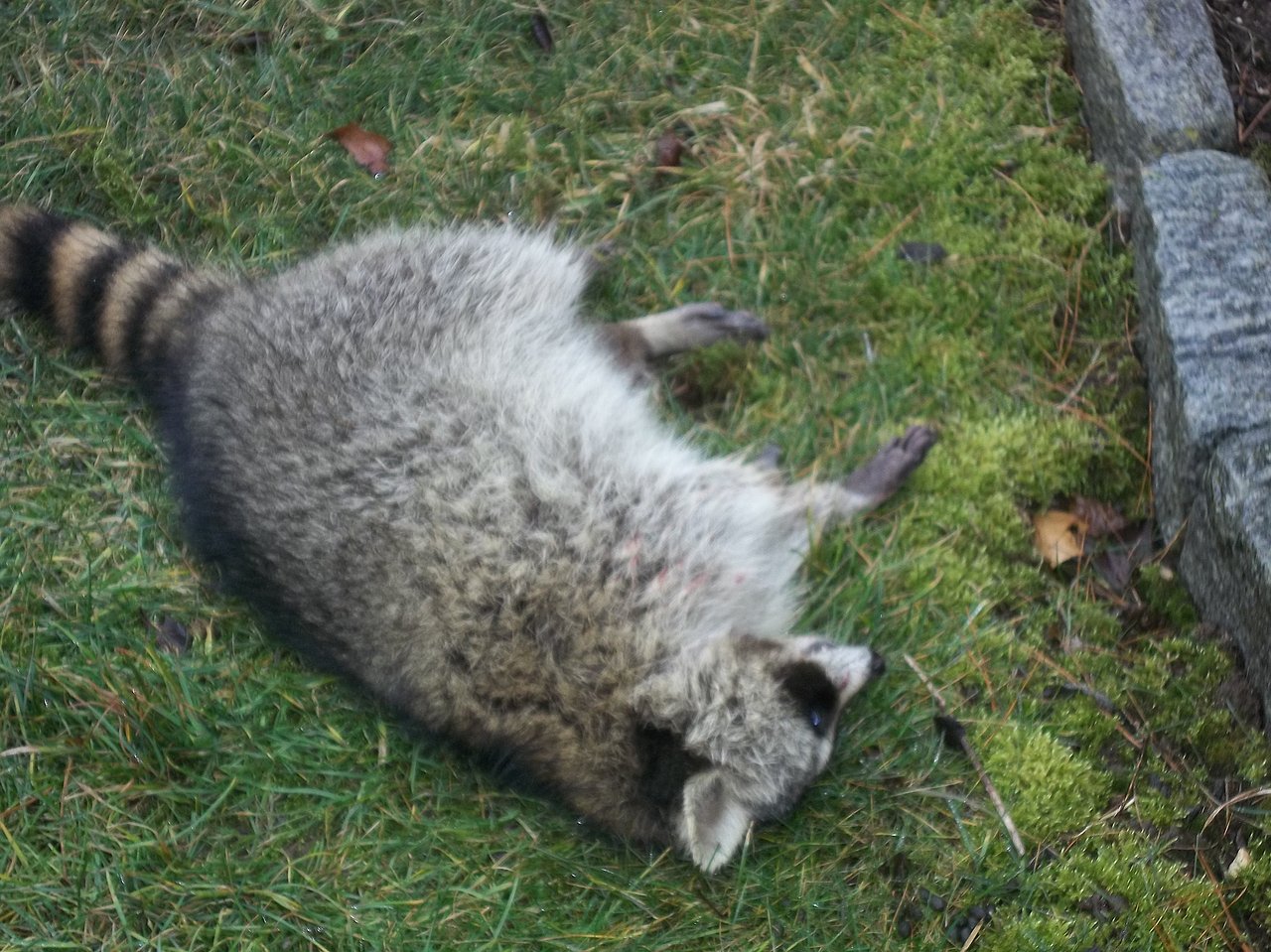
Dead squirrels, skunks, raccoons, opossums, birds, rabbits, rodents, and other wildlife may be found on lawns, near fences, beside sheds, around gardens, under porches, or along wooded property edges.
Dead Deer on Private Property
If a deer dies on the lawn, in the backyard, along a driveway, or away from the roadway, removal may fall to the property owner. Floyd’s may provide limited large animal removal on a case-by-case basis when access, safety, disposal, and equipment needs allow.
Odor & Fly Problems
Dead animals can begin producing odor quickly, especially in warm weather. Flies, maggots, staining, scavenger activity, and smell can become worse the longer the animal remains on the property.
Common Places Dead Animals Are Found Around Connecticut Homes
A dead animal is not always easy to see. Sometimes the odor is the first sign. Animals may die in open areas like lawns and driveways, but they can also end up hidden inside crawlspaces, under porches, behind walls, inside attics, in chimneys, or near vents where they are difficult to reach.
Under Porches & Decks
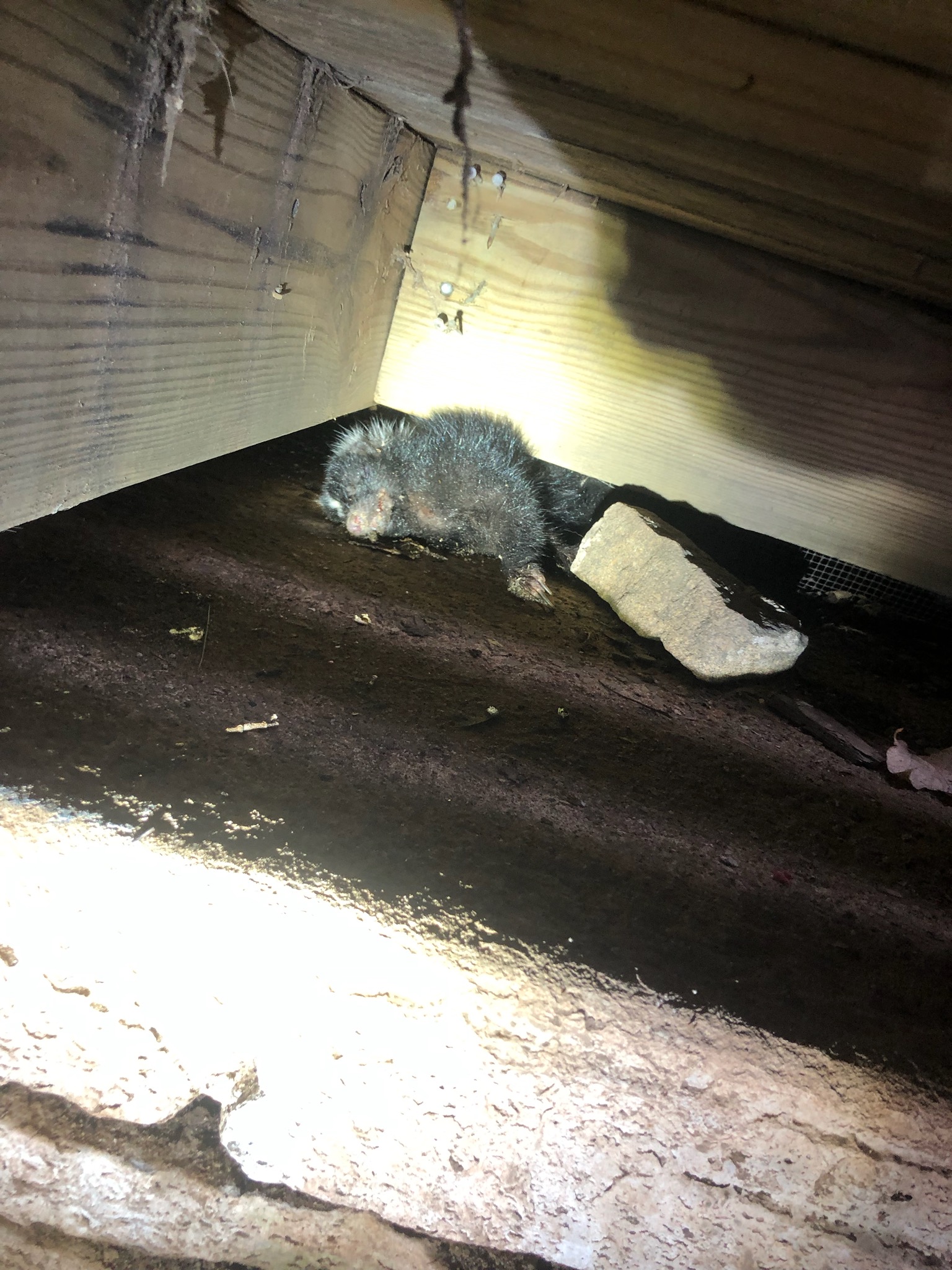
Skunks, raccoons, opossums, cats, rabbits, and other animals may crawl under porches, decks, steps, additions, or sheds before dying. These areas can trap odor and make removal more difficult.
Crawlspaces & Basements
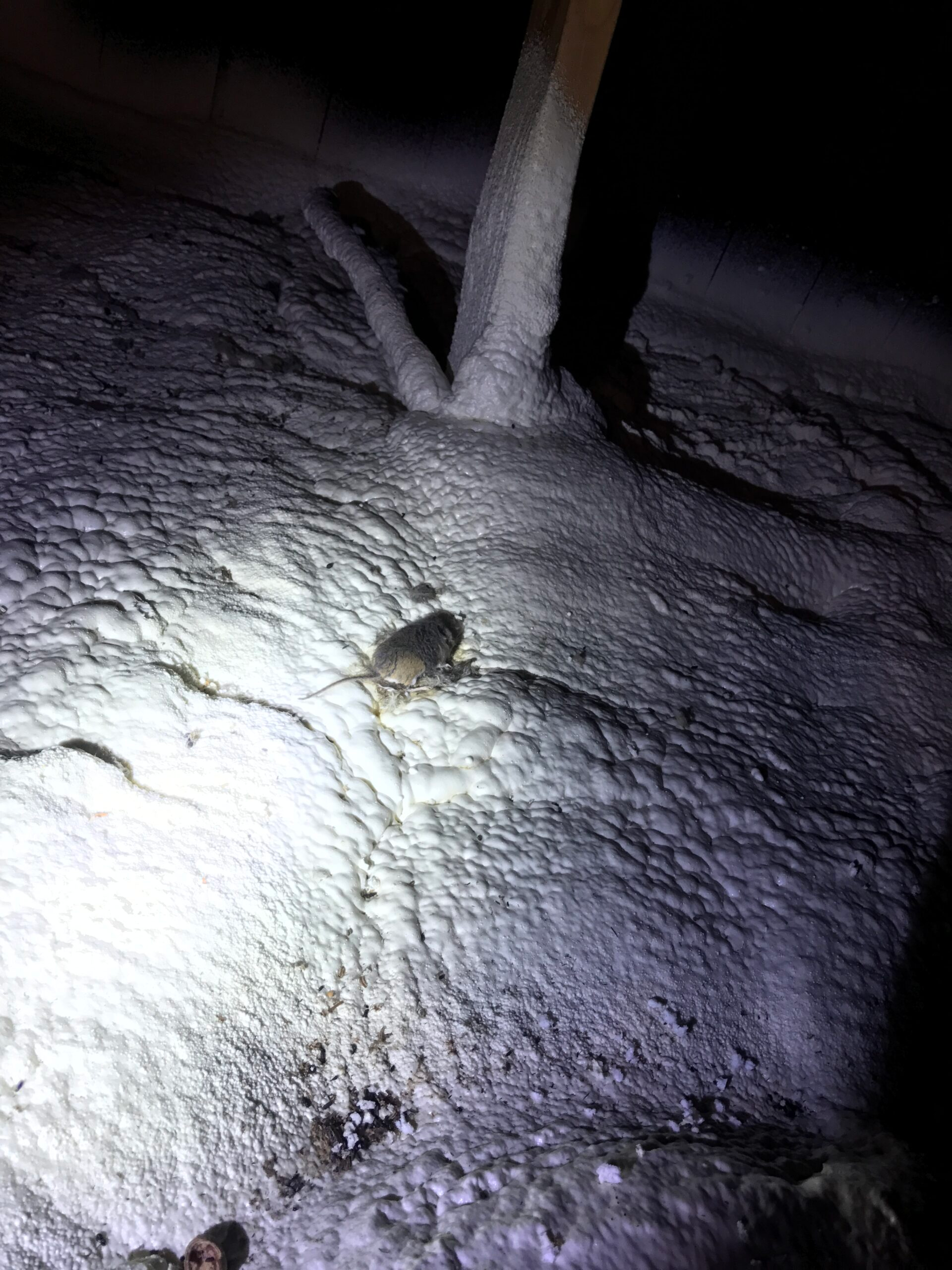
Dead mice, rats, squirrels, skunks, raccoons, and other animals may be found in crawlspaces, basement corners, utility areas, sill plate gaps, and unfinished structural spaces.
Attics & Wall Voids
Animals may die inside attics, insulation, wall voids, ceiling spaces, soffits, and roofline openings. When the source is hidden, odor may move through rooms, vents, closets, or ceiling areas.
Chimneys, Vents & Exhaust Lines
Birds, squirrels, bats, raccoons, and rodents may become trapped in chimneys, bathroom vents, dryer vents, gable vents, and exhaust openings. Dead animals in vents can create odor and blocked airflow.
Lawns, Driveways & Wooded Edges
Dead skunks, raccoons, squirrels, opossums, rabbits, birds, rodents, and deer may be found on lawns, beside driveways, near fences, along stone walls, or at the edge of wooded property.
Garages, Sheds & Outbuildings
Detached garages, barns, sheds, storage areas, and outbuildings can provide shelter for injured, sick, poisoned, or trapped animals. These locations should be checked when odor appears suddenly.
Dead Animal Odor Control Starts With Finding the Source
Dead animal odor can spread through a home quickly, especially when the animal is hidden inside a wall void, crawlspace, attic, chimney, soffit, vent line, or under a porch. Sprays, candles, air fresheners, and deodorizers may temporarily cover the smell, but they do not solve the problem if the animal remains inside the structure.
Floyd’s Pest & Wildlife Control focuses on locating the source of the odor whenever possible. The search may include checking crawlspaces, attic areas, basement edges, wall cavities, vents, chimneys, porch openings, deck voids, garages, sheds, and nearby exterior areas where an animal may have died.
After the animal is removed, additional cleanup, sanitization, deodorizing, or exclusion recommendations may be needed depending on the location, amount of contamination, and how long the animal was present.
Dead Animal Removal Process
Dead animal removal depends on where the animal is located, how accessible it is, how long it has been there, and whether odor, staining, flies, or contamination are present. Floyd’s Pest & Wildlife Control uses a practical inspection-based approach to locate and remove the animal when accessible.
1. Locate the Source
The first step is identifying where the odor or dead animal is coming from. Common inspection areas include crawlspaces, attics, basements, wall voids, porch openings, vents, chimneys, garages, sheds, and nearby exterior areas.
2. Remove the Animal
When the animal is accessible, it can be removed from the property or structure. Removal may involve dead mice, rats, squirrels, skunks, raccoons, opossums, birds, bats, rabbits, or other nuisance wildlife.
3. Address Odor & Contamination
After removal, the affected area may need odor source reduction, sanitization, contaminated material removal, or cleanup depending on the location and condition of the animal.
4. Recommend Prevention
If the animal entered through a vent, crawlspace opening, soffit gap, chimney, foundation hole, or attic access point, exclusion or repair recommendations may be made to help prevent future wildlife problems.
Dead Wildlife Floyd’s Pest & Wildlife Control May Remove
Dead animal removal can involve small animals hidden inside structures, medium-sized wildlife under decks or porches, or larger animals on private property. Availability depends on access, location, condition of the animal, disposal requirements, and safety concerns.
Dead Squirrels
Squirrels may die in attics, soffits, chimneys, wall voids, vents, or around roofline openings. If odor is coming from an upper room, ceiling area, or attic space, a dead squirrel may be one possible source.
Dead Birds & Bats
Birds and bats may die in vents, attics, chimneys, wall voids, gable areas, or behind trim. Removal may also include checking for nesting material, guano, droppings, blocked vents, or related contamination.
Dead Deer & Larger Animals
Dead deer and larger animal removal may be available on a limited, case-by-case basis. Factors include access, size, location, condition, equipment needs, disposal options, and safety concerns.
More Than Removal: Odor, Cleanup & Wildlife Prevention
Removing the dead animal is the first priority, but it may not be the only issue. Depending on where the animal died, there may be odor, fluids, staining, flies, maggots, nesting material, contaminated insulation, or an entry point that allowed the animal into the structure.
Odor Source Removal
Dead animal odor usually does not go away quickly if the source remains in place. Locating and removing the animal helps reduce the source of the smell instead of simply masking it with sprays or air fresheners.
Sanitization Recommendations
After removal, affected areas may need sanitization or cleanup depending on the location, condition of the animal, and whether fluids, droppings, nesting material, or contaminated insulation are present.
Fly & Maggot Issues
Dead animals can attract flies quickly, especially during warmer weather. If the animal is hidden in a wall, crawlspace, attic, or under a porch, flies inside the home may be one of the first signs.
Entry Point Inspection
If an animal died inside the home, there may be an opening that allowed it to enter. Floyd’s can inspect for crawlspace gaps, vent openings, soffit damage, roofline gaps, foundation openings, and other access points.
Attic & Crawlspace Cleanup
Dead animals in attics or crawlspaces may be part of a larger contamination issue involving droppings, urine, damaged insulation, nesting material, or odor. Cleanup recommendations depend on what is found during inspection.
Attic cleanouts, sanitization & insulation removalWildlife Exclusion
Once the animal is removed, exclusion repairs may be recommended to help prevent future animals from entering the same attic, crawlspace, vent, chimney, porch, shed, garage, or wall void.
Dead Animal Removal Services Throughout Connecticut
Floyd’s Pest & Wildlife Control provides dead animal removal, odor source location, cleanup recommendations, and wildlife prevention services for Connecticut homeowners dealing with dead animals on private property or inside structures.
New London County
Dead animal removal for lawns, crawlspaces, porches, attics, basements, sheds, garages, wooded edges, and private property throughout New London County.
New London County Wildlife RemovalFairfield County
Dead skunk, raccoon, squirrel, rodent, bird, and nuisance wildlife removal from private property, yards, crawlspaces, attics, and structures in Fairfield County.
Fairfield County Wildlife RemovalMiddlesex County
Dead animal odor source location, removal, crawlspace inspection, porch removal, attic checks, and wildlife prevention services in Middlesex County.
Middlesex County Wildlife RemovalNew Haven County
Dead wildlife removal, dead animal odor control, rodent odor source checks, private property removal, and cleanup recommendations throughout New Haven County.
New Haven County Wildlife RemovalHartford County
Dead animal removal and odor source inspection for Connecticut homes with dead wildlife in attics, crawlspaces, wall voids, garages, porches, lawns, and private property areas.
Hartford County Wildlife RemovalDead Animal Removal & Odor Control FAQs
Dead animal problems often start with a strong smell, flies, or a visible animal on private property. These questions explain what to do when dead wildlife is found in a yard, under a porch, inside a crawlspace, in an attic, or hidden somewhere inside the structure.
Who removes a dead animal from my lawn in Connecticut?
If the dead animal is on private property and not in the roadway, removal is often the homeowner’s responsibility. Floyd’s Pest & Wildlife Control provides dead animal removal services for Connecticut homeowners when dead wildlife is found on lawns, near sheds, under porches, beside driveways, or around the structure.
Will the state or town remove a dead animal from my yard?
Road crews generally focus on animals located in the roadway or creating a traffic hazard. If a skunk, raccoon, squirrel, deer, or other animal dies on a lawn, backyard, driveway edge, landscaped area, or other private property area, the property owner may need to arrange removal.
Do you remove dead animals from under porches and decks?
Yes, when accessible. Dead skunks, raccoons, opossums, squirrels, rabbits, cats, and other animals may crawl under decks, porches, stairs, additions, or sheds before dying. Access, odor, condition of the animal, and safety concerns determine how removal is handled.
What if the dead animal smell is coming from a wall or ceiling?
Odor coming from a wall, ceiling, closet, vent, or upper room may indicate a dead animal inside a wall void, attic, soffit, chimney, or duct area. Floyd’s can inspect likely source areas and remove the animal when it is reachable.
Can you remove dead mice or rats from crawlspaces?
Yes. Dead mice and rats are commonly found in crawlspaces, basements, garages, utility areas, drop ceilings, wall voids, and attic insulation. Odor may be the first sign if the animal is hidden. Removal may also lead to rodent entry point or sanitation recommendations.
Do you remove dead deer from private property?
Floyd’s may provide limited large animal removal, including dead deer removal, on a case-by-case basis. Availability depends on the animal’s location, access, size, condition, disposal options, equipment needs, and safety concerns.
How long does dead animal odor last?
Odor depends on the size of the animal, temperature, airflow, location, and how long the animal has been there. A dead mouse may create a short but strong odor, while a dead skunk, raccoon, opossum, or larger animal can create a much more severe smell. Removing the source is the most important step.
Why are there suddenly flies in my house?
A sudden fly problem can be a sign of a dead animal hidden inside a wall, attic, crawlspace, chimney, basement, vent, or under a porch. Flies may appear after the animal has been dead long enough to attract insect activity.
Is cleanup needed after a dead animal is removed?
Cleanup may be needed depending on where the animal died and whether fluids, staining, odor, maggots, nesting material, droppings, or contaminated insulation are present. Crawlspaces, attics, vents, and enclosed porch areas may need additional cleanup or odor treatment.
Can dead animal removal help prevent future wildlife problems?
Yes. If the animal died inside a structure, there may be an entry point that allowed it inside. After removal, Floyd’s can inspect for gaps, vents, soffits, crawlspace openings, chimney access, foundation holes, or other areas that may need exclusion work.
Dead Wildlife • Odor Control • Crawlspaces • Lawns • Porches • Attics
Need Dead Animal Removal in Connecticut?
If you found a dead skunk, raccoon, squirrel, mouse, rat, bird, opossum, deer, or other animal on your property or smell a dead animal inside the structure, Floyd’s Pest & Wildlife Control can help locate the source, remove accessible animals, and recommend cleanup or prevention options.
Dead animal removal, odor source location, crawlspace checks, attic inspections, porch removal, limited large animal removal, cleanup recommendations, and wildlife exclusion services.