
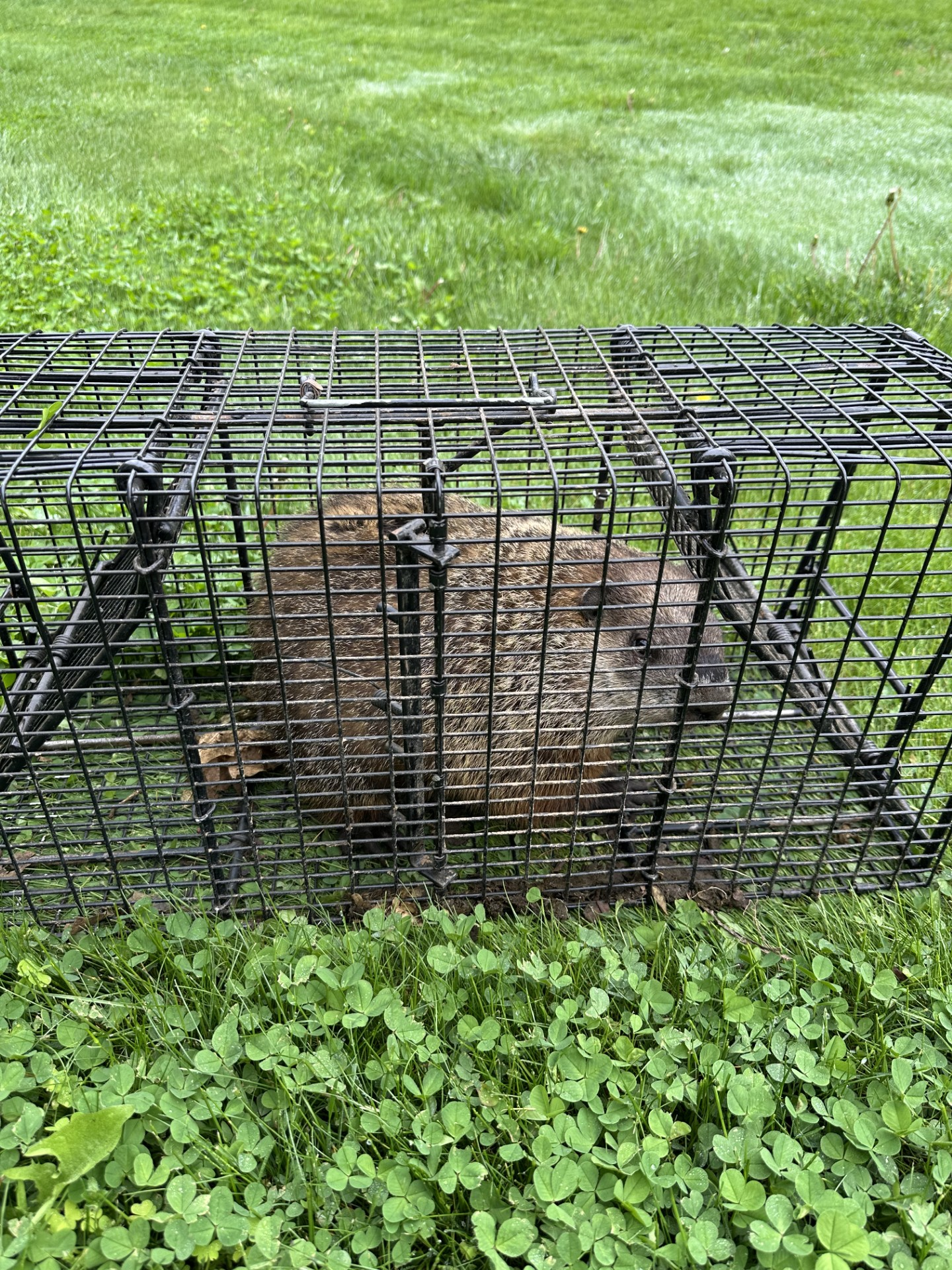
Professional Woodchuck & Groundhog Removal for Southwestern Fairfield County Properties
Woodchucks, also called groundhogs, can create serious problems when they begin digging around sheds, decks, patios, gardens, stone walls, pool areas, landscaped beds, and lawn edges. On high-value properties in Greenwich, Stamford, Darien, and New Canaan, a single active burrow system can damage carefully maintained grounds and create safety concerns around the yard.
Floyd’s Pest & Wildlife Control provides professional woodchuck and groundhog removal services throughout southwestern Fairfield County. Our approach focuses on identifying active burrows, understanding where the animal is traveling, addressing the current problem, and helping property owners reduce the chance of repeat digging activity.
Whether a woodchuck is living under a shed in Greenwich, digging beside a patio in Darien, damaging a garden in New Canaan, or burrowing along a landscaped edge in Stamford, Floyd’s can inspect the property and recommend the right removal and prevention plan.
Woodchuck Removal Photos from Connecticut Properties
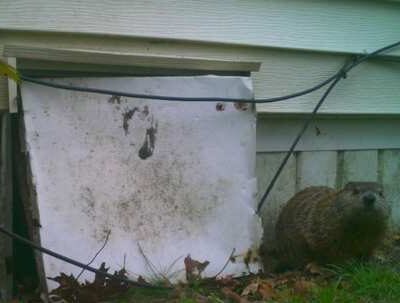
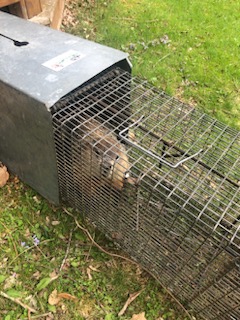
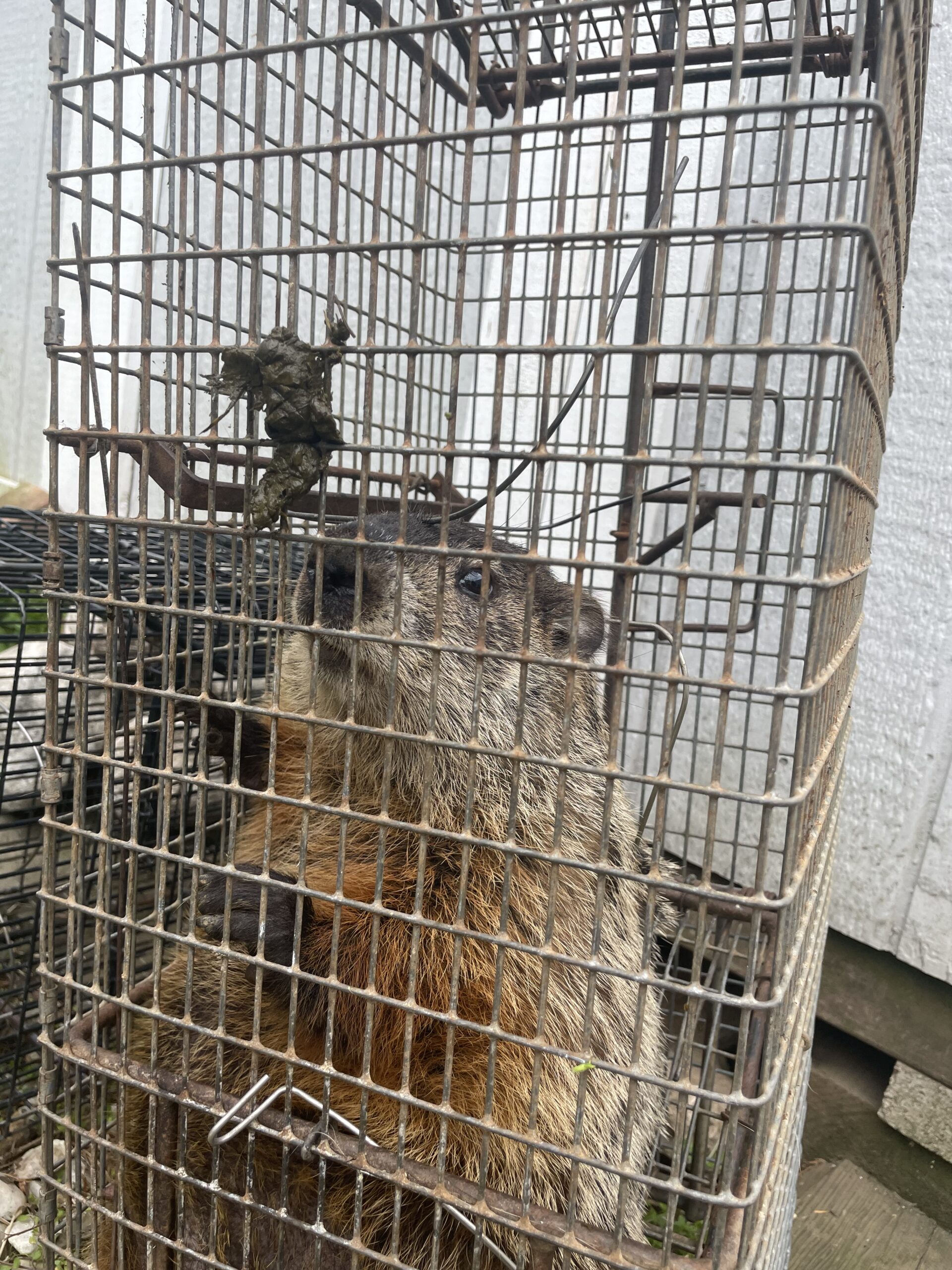
Woodchuck and groundhog problems often involve burrows around sheds, crawlspace edges, landscaped areas, gardens, barns, lawns, and property borders. The photos below show examples of woodchucks removed during professional wildlife control work in Connecticut.
Why Woodchucks Are a Problem on Greenwich-Area Properties
Woodchucks are powerful digging animals. Once they choose a property, they often build burrow systems along protected edges where the soil is easier to dig and the entrance is hidden from view. In southwestern Fairfield County, that commonly means burrows near sheds, decks, patios, stone walls, gardens, pool areas, landscaped beds, and wooded property lines.
On large landscaped properties in Greenwich, Stamford, Darien, and New Canaan, a woodchuck problem can become more than a nuisance. Burrows can weaken soil around hardscapes, create holes in lawn areas, damage gardens, disturb mulch beds, and lead to repeat digging in the same location if the active animal is not addressed.
Sheds & Decks
Woodchucks often dig under sheds, decks, and raised structures because these areas provide cover, shade, and protection.
Gardens & Landscaping
Groundhogs feed on vegetation and can quickly damage gardens, ornamental plants, landscaped beds, and maintained grounds.
Stone Walls & Patios
Burrowing near stone walls, patio edges, walkways, and retaining areas can create voids, erosion, and long-term property concerns.
Lawn Safety
Large holes and hidden burrow openings can create trip hazards for homeowners, children, guests, landscapers, and pets.
Common Signs of Woodchuck Activity
Woodchuck problems are often noticed after a homeowner, landscaper, gardener, or property manager finds a large hole near a structure or landscaped area. Unlike small rodent holes, woodchuck burrow openings are usually wide, obvious, and often have fresh dirt pushed outside the entrance.
On Fairfield County properties, groundhog activity is commonly found along the edges of buildings, sheds, decks, pool areas, stone walls, gardens, patios, and wooded borders where the animal has cover and easy access to food.
Large Burrow Openings
Woodchuck holes are usually much larger than chipmunk or mouse holes and may appear near sheds, decks, patios, crawlspace edges, or landscape borders.
Fresh Dirt Piles
Freshly moved soil outside a hole is a strong sign that the burrow is active and the animal may still be using the site.
Clipped Vegetation
Groundhogs feed on grasses, garden plants, vegetables, flowers, and low vegetation, often leaving clipped or damaged areas behind.
Daytime Sightings
Woodchucks are often seen during daylight hours, especially near lawns, gardens, field edges, stone walls, and wooded borders.
Digging Near Stone Walls
Woodchucks may burrow along stone walls, retaining edges, and hardscape borders where soil is protected and less exposed.
Reopened Holes
If a hole was filled and later reopened, that usually means the woodchuck problem was still active and the animal returned or dug back out.
Damage Caused by Woodchuck Burrows
Woodchuck burrows can cause problems above and below the surface. The visible hole is only part of the issue. A groundhog may create tunnels, side entrances, escape holes, and underground voids that weaken soil around structures, lawn areas, patios, gardens, and landscaped sections of the property.
On high-value properties in Greenwich, Stamford, Darien, and New Canaan, burrowing activity can interfere with lawn maintenance, damage planted areas, create soft spots in the ground, and undermine areas that were carefully graded or landscaped.
Lawn Hazards
Large burrow openings and soft tunnel areas can create trip hazards for homeowners, guests, children, pets, landscapers, and maintenance crews.
Garden Damage
Groundhogs feed heavily on garden plants, vegetables, flowers, and ornamental vegetation, often causing repeated damage once they establish a den nearby.
Undermined Sheds & Decks
Woodchucks often dig under sheds, decks, steps, and raised structures, creating voids that can lead to settling, access problems, and repeat use by other animals.
Patio & Hardscape Problems
Burrows near patio edges, walkways, stone borders, and retaining areas can contribute to erosion, shifting soil, and hollow areas around hardscaped sections.
Stone Wall Issues
Digging near stone walls, retaining walls, and landscaped borders can loosen soil, open hidden voids, and create ongoing repair concerns.
Foundation-Edge Digging
Woodchucks may dig near crawlspace edges, foundation lines, steps, porch areas, and lower structural openings where the soil provides cover and protection.
Need Woodchuck or Groundhog Removal in Greenwich, Stamford, Darien, or New Canaan?
If a woodchuck is digging under a shed, deck, patio, crawlspace edge, garden, stone wall, pool area, or landscaped section of your property, Floyd’s Pest & Wildlife Control can inspect the problem and recommend the right removal and prevention plan.
Woodchuck Removal in Greenwich, Stamford, Darien & New Canaan CT
Floyd’s Pest & Wildlife Control provides woodchuck and groundhog removal for homeowners, property managers, estates, landscaped residential properties, and businesses throughout southwestern Fairfield County. Each town has different property layouts, but the problem is often the same: active burrows near protected edges where the animal has cover, food, and access.
Woodchuck Removal in Greenwich, CT
Greenwich properties often include large lawns, gardens, stone walls, wooded edges, pool areas, sheds, patios, and landscaped grounds where woodchucks can dig and feed. Burrows may appear near estate landscaping, garden borders, deck edges, and lower structural areas.
Floyd’s provides professional woodchuck and groundhog removal for Greenwich properties, along with inspection and prevention recommendations when repeat digging is a concern. Learn more about wildlife removal in Greenwich CT.
Woodchuck Removal in Stamford, CT
In Stamford, woodchucks may dig near residential yards, garden areas, commercial edges, sheds, decks, patios, wooded borders, and crawlspace openings. Properties with mixed lawn, brush, and structural cover can give groundhogs ideal places to establish burrows.
Floyd’s helps Stamford property owners identify active burrows, remove problem woodchucks, and reduce the chance of continued digging. Visit the Stamford CT wildlife removal and prevention page.
Woodchuck Removal in Darien, CT
Darien homes often have landscaped beds, patios, stone borders, garden areas, and maintained lawn spaces where woodchuck damage can be especially noticeable. Groundhogs may burrow along hardscape edges, under decks, near sheds, or beside protected landscape features.
Floyd’s provides discreet woodchuck and groundhog removal in Darien with attention to property protection and prevention. See more about woodchuck and wildlife removal in Darien CT.
Woodchuck Removal in New Canaan, CT
New Canaan properties frequently include wooded edges, open lawns, gardens, barns, sheds, stone walls, decks, and high-value landscaped areas. Woodchucks may use these areas for burrows and feeding activity, causing lawn damage, garden loss, and repeat hole openings.
Floyd’s can inspect New Canaan properties for active groundhog burrows and provide a removal plan based on the site conditions. Learn more about New Canaan CT wildlife control services.
How Floyd Handles Woodchuck Problems
A successful woodchuck removal job starts with understanding the property, the active burrow system, and the areas being damaged. Floyd’s Pest & Wildlife Control does not treat woodchuck problems as a one-size-fits-all situation. The goal is to identify where the groundhog is living, where it is traveling, what areas are being damaged, and what can be done to reduce repeat activity.
1. Property Inspection
Floyd’s checks the area for active burrows, fresh digging, feeding damage, travel routes, secondary holes, and vulnerable property edges near sheds, decks, patios, gardens, stone walls, and landscaped areas.
2. Active Burrow Identification
Not every hole is active. Floyd’s looks for signs such as fresh soil, clean entrances, worn travel paths, reopened holes, clipped vegetation, and recent sightings to determine where the groundhog is currently using the property.
3. Removal Plan
Once the active area is identified, Floyd’s develops a woodchuck removal plan based on the burrow location, property layout, surrounding activity, and the type of damage being caused.
4. Follow-Up & Monitoring
Woodchuck activity may require follow-up checks to confirm the problem has been controlled and to look for continued digging, reopened holes, or signs of additional animals using the same area.
5. Prevention Recommendations
After the active problem is addressed, Floyd’s can recommend ways to reduce future burrowing around vulnerable areas such as shed bases, deck edges, crawlspace openings, patio borders, stone walls, and garden spaces.
6. Property Protection Focus
The focus is not only removing the woodchuck. Floyd’s also looks at the surrounding conditions that allowed the animal to settle in, especially on landscaped Fairfield County properties where repeated digging can become expensive.
Prevention Work for Burrowing Wildlife Problems
After a woodchuck or groundhog problem is handled, some properties may need additional prevention work around the areas most likely to be dug under again. Woodchucks often target protected edges where soil is easier to move and the entrance can stay hidden.
On Greenwich, Stamford, Darien, and New Canaan properties, those vulnerable areas often include patios, decks, sheds, crawlspace openings, stone walls, pool areas, landscaped borders, and foundation-edge spaces.
Depending on the property, prevention may include trenching, screening, exclusion material, closing vulnerable gaps, or recommending repairs that make the area less attractive for repeat burrowing activity.
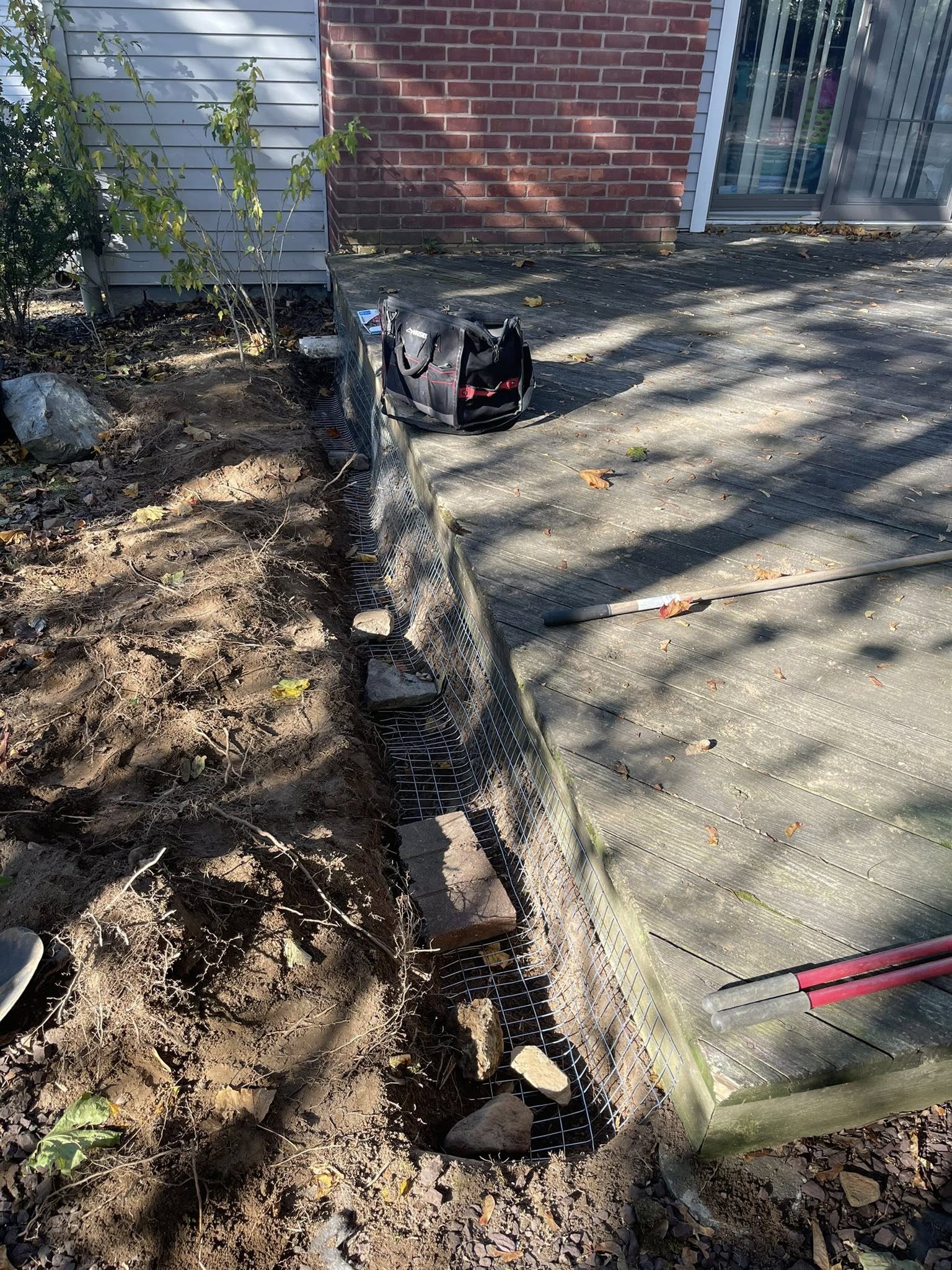
Why Filling a Woodchuck Hole Usually Does Not Solve the Problem
Many homeowners first try to solve a woodchuck problem by filling the hole with soil, stone, gravel, mulch, or debris. In most active situations, this only hides the problem temporarily. If the groundhog is still using the burrow, it may dig the entrance back open, create a new opening nearby, or expand another part of the tunnel system.
Woodchuck burrows can have more than one entrance. The visible hole near a shed, deck, patio, stone wall, garden, or landscaped area may only be one part of the system. Filling one opening does not remove the animal, does not confirm the burrow is inactive, and does not correct the reason the area was attractive in the first place.
Common Problems With Filling Woodchuck Holes
- The woodchuck may reopen the same hole.
- The animal may dig a new entrance nearby.
- Secondary holes may still be active.
- Underground voids may remain beneath the surface.
- Other wildlife may later use the same protected area.
- The original shed, deck, patio, garden, or stone wall edge may still be vulnerable.
Before closing or repairing a burrow area, the active animal should be addressed and the property should be checked for signs of continued use. Floyd’s Pest & Wildlife Control can inspect the problem area, determine whether the burrow appears active, and recommend the proper next step for woodchuck and groundhog removal in Greenwich, Stamford, Darien, New Canaan, and nearby Fairfield County towns.
Related Wildlife Services in Fairfield County
Woodchuck problems are often part of a larger property-protection concern. The same sheds, decks, crawlspace edges, stone walls, gardens, patios, garages, and landscaped areas that attract groundhogs may also attract skunks, raccoons, squirrels, rodents, and other nuisance wildlife.
Floyd’s Pest & Wildlife Control provides wildlife removal, pest control, exclusion, cleanup, and prevention services throughout Fairfield County, including Greenwich, Stamford, Darien, New Canaan, and nearby towns.
Woodchuck Removal
Groundhog and woodchuck removal for burrows near sheds, decks, patios, gardens, stone walls, landscaped areas, and lawn edges.
Raccoon Removal
Raccoon removal for attics, chimneys, garages, sheds, crawlspaces, rooflines, and property areas where raccoons are causing damage.
Skunk Removal
Skunk removal and prevention for digging under sheds, decks, steps, porches, patios, crawlspaces, and landscaped areas.
Squirrel Removal
Squirrel removal for attic activity, roofline entry points, soffit damage, fascia gaps, vents, and nesting inside structures.
Rodent Control
Mouse and rat control for homes, basements, crawlspaces, garages, attics, sheds, utility areas, and other vulnerable spaces.
Fairfield County Wildlife Removal
Wildlife removal, pest control, exclusion, prevention, and cleanup services for towns throughout Fairfield County.
Woodchuck & Groundhog Removal FAQs
Are woodchucks and groundhogs the same animal?
Yes. Woodchuck and groundhog are two common names for the same animal. In Connecticut, homeowners may use either name when describing burrows, lawn damage, garden damage, or digging under sheds, decks, patios, and stone walls.
Why do woodchucks dig under sheds and decks?
Sheds, decks, porches, crawlspace edges, and patios provide cover and protection. These areas can hide the burrow entrance, protect the animal from weather and predators, and give the woodchuck easy access to lawns, gardens, and landscaped areas.
Can I fill in a woodchuck hole?
Filling a woodchuck hole usually does not solve an active problem. If the groundhog is still using the burrow, it may reopen the same hole, dig a new entrance nearby, or continue using another part of the tunnel system.
Do woodchucks damage lawns and gardens?
Yes. Woodchucks can damage lawns by creating large holes, soft spots, and underground voids. They also feed on garden plants, vegetables, flowers, and low vegetation, which can cause repeated damage when a burrow is established nearby.
Are woodchuck burrows dangerous around landscaped properties?
They can be. Large burrow openings may create trip hazards, especially in lawn areas, gardens, walkways, and landscaped sections. Burrows near patios, stone walls, sheds, decks, and retaining edges can also create erosion, soft soil, or hollow areas beneath the surface.
What time of year are woodchucks most active in Connecticut?
Woodchuck activity is most noticeable during the warmer months when they are feeding, digging, and moving around during daylight hours. Homeowners often notice problems in spring, summer, and early fall when lawn, garden, and landscape damage becomes more visible.
Does Floyd’s Pest & Wildlife Control remove woodchucks in Greenwich, Stamford, Darien, and New Canaan?
Yes. Floyd’s Pest & Wildlife Control provides woodchuck and groundhog removal in Greenwich, Stamford, Darien, New Canaan, and nearby Fairfield County towns.
Can woodchucks come back after removal?
They can if the property still has attractive burrow locations, open access under sheds or decks, garden food sources, protected edges, or old burrow systems. That is why inspection and prevention recommendations are important after the active animal is addressed.
Woodchuck & Groundhog Removal in Greenwich, Stamford, Darien & New Canaan CT
If you are dealing with a woodchuck burrow near a shed, deck, patio, crawlspace edge, garden, stone wall, pool area, landscaped bed, or lawn edge, Floyd’s Pest & Wildlife Control can inspect the property and recommend the right removal and prevention plan.
We provide professional woodchuck and groundhog removal for homes, estates, landscaped properties, and businesses throughout Greenwich, Stamford, Darien, New Canaan, and nearby southwestern Fairfield County towns.